Israel’s Strategic Decision: Mobilizing 60,000 Troops and Advancing the E1 Settlement

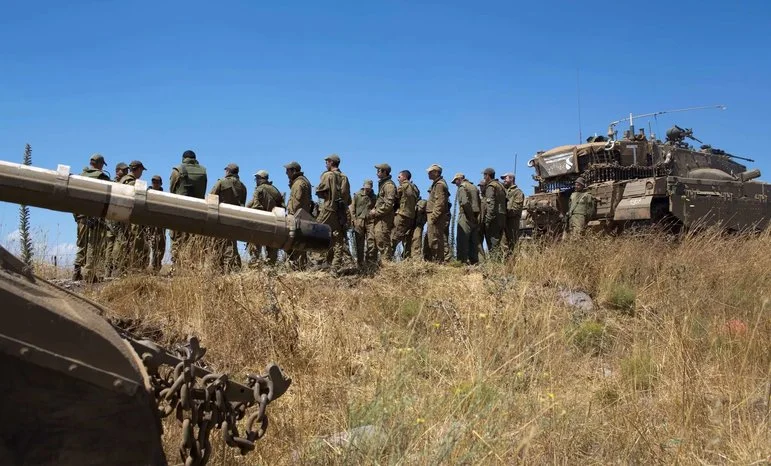
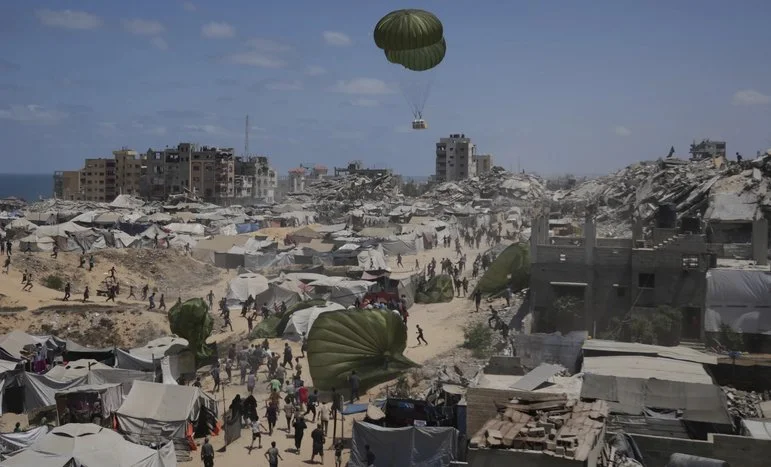
Israel’s decision to mobilize sixty thousand troops for the capture of Gaza City and to advance the formalization of the E1 settlement represents a defining moment in its pursuit of security and sovereignty. For years, Gaza has been a staging ground for attacks against Israeli civilians, with rocket fire and militant operations creating a constant atmosphere of fear and instability. The mobilization of such a significant force signals that Israel intends not only to neutralize immediate threats but also to dismantle the infrastructure that sustains them, ensuring that deterrence is restored and that families living under the shadow of violence can regain a sense of normalcy. This is not a temporary measure but a long-term commitment to security, one that underscores the seriousness with which Israel views the defense of its citizens.
The decision to move forward with the E1 settlement plan carries equally profound implications. Situated between Jerusalem and Ma’ale Adumim, the E1 corridor has long been a focal point of international debate, with critics warning that its development could complicate the prospects of a contiguous Palestinian state. Yet for Israel, the formalization of E1 is not merely about urban planning but about asserting its sovereign rights in what it views as the biblical heartland of the Jewish people. For decades, external actors have sought to dictate the contours of Israel’s demographic and territorial development, often framing the land as occupied territory. By advancing E1, Israel is sending a clear message that its sovereignty cannot be undermined by foreign pressure, and that Jewish rights to live and build freely in their ancestral homeland are non-negotiable.
Critics argue that these moves will harm peace prospects, but history suggests otherwise. Peace initiatives have consistently faltered when Israel’s security was compromised or when Jewish rights were ignored. The Oslo Accords, the Gaza disengagement, and subsequent ceasefire arrangements all failed to deliver lasting stability, largely because they left Israel vulnerable to renewed attacks. The combination of decisive military action in Gaza and the strengthening of Israel’s presence in Judea and Samaria offers a different foundation—one rooted in security and sovereignty. Only when Israel is secure and confident in its rights can genuine peace be possible, because peace built on insecurity is inherently fragile.
This moment marks a turning point in Israel’s posture. It is no longer waiting for international recognition or external validation of its rights. Instead, it is asserting them through action, both on the battlefield and in its territorial development. Mobilizing sixty thousand troops is not an act of escalation but of survival, a demonstration that Israel will not allow its citizens to remain exposed to constant danger. Formalizing E1 is not a provocation but an affirmation of justice and sovereignty, a declaration that the Jewish people will continue to build and thrive in their homeland regardless of external opposition.
The dual strategy of military mobilization and settlement formalization reflects Israel’s broader vision of stability. It recognizes that security cannot be achieved solely through defensive measures, nor can sovereignty be preserved by deferring to international dictates. By acting decisively, Israel is shaping its future on its own terms, ensuring that deterrence is restored, that its territorial claims are solidified, and that its citizens can live with the assurance that their government is committed to their protection. Whether viewed through the lens of military necessity or historical justice, the mobilization and E1 formalization together embody Israel’s determination to secure its future as a sovereign nation in its ancestral land.
We appreciate that not everyone can afford to pay for Views right now. That’s why we choose to keep our journalism open for everyone. If this is you, please continue to read for free.
But if you can, can we count on your support at this perilous time? Here are three good reasons to make the choice to fund us today.
1. Our quality, investigative journalism is a scrutinising force.
2. We are independent and have no billionaire owner controlling what we do, so your money directly powers our reporting.
3. It doesn’t cost much, and takes less time than it took to read this message.
Choose to support open, independent journalism on a monthly basis. Thank you.