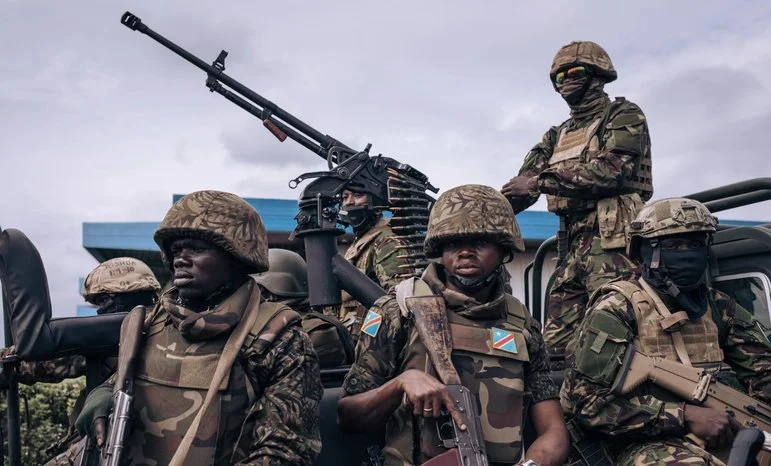
Eastern DRC in Turmoil: A Relentless Cycle of Conflict and Suffering
The eastern Democratic Republic of Congo remains one of the world’s most complex and underreported crises, a region where violence has become cyclical and suffering unrelenting. North Kivu, South Kivu, and Ituri provinces are at the heart of this turmoil, plagued by more than one hundred active armed groups, intercommunal violence, and cross-border tensions that have destabilized communities for decades. The persistence of these conflicts reflects not only unresolved historical grievances but also the failure of successive governments and international interventions to create lasting peace. What emerges is a portrait of a region trapped in a relentless cycle of insecurity, where every attempt at stabilization seems to be undone by the resurgence of armed factions and the deep-rooted mistrust among communities.
Militias such as the M23 Movement, the Allied Democratic Forces, and numerous Mai-Mai factions have launched recurring offensives that often target civilians, displace entire communities, and attack government forces or UN peacekeepers. These groups thrive in the vacuum left by weak governance and exploit ethnic divisions, resource competition, and porous borders to sustain their campaigns. Efforts by the Congolese military and UN peacekeeping forces have achieved limited success, and violence has intensified in recent years, with allegations of foreign support to certain groups adding to regional friction. The result is a landscape where armed groups operate with impunity, and civilians bear the brunt of the conflict, living in constant fear of raids, abductions, and massacres.
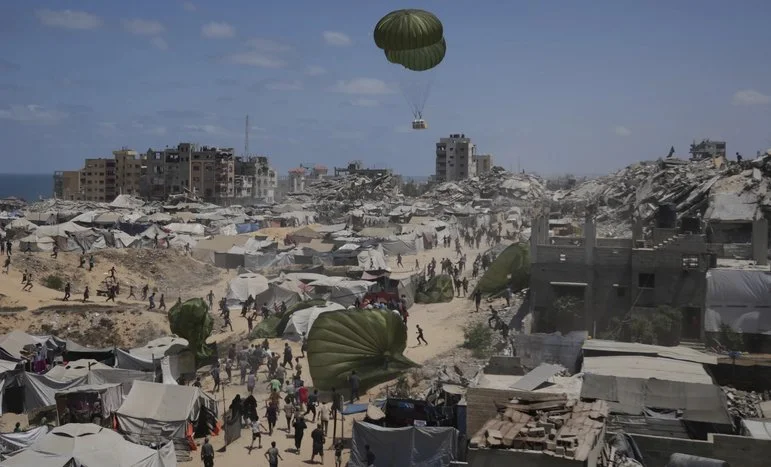
The humanitarian toll is staggering. More than seven million people are displaced within the DRC, the highest number in Africa, creating a crisis of shelter, food, and basic survival. Human rights violations are widespread, including mass killings, sexual violence, and the recruitment of child soldiers. Basic services such as healthcare, education, and infrastructure are scarce or nonexistent in many conflict zones, leaving communities without the means to rebuild their lives. Food insecurity is rampant, cholera outbreaks spread quickly in overcrowded camps, and the lack of access to clean water makes daily life a struggle for millions. The suffering is compounded by the absence of sustained international attention, as the crisis rarely dominates global headlines despite its scale.
The instability in eastern DRC is not confined within its borders. Rwanda and Uganda have repeatedly been accused of involvement, either directly or by proxy, fueling suspicions and diplomatic tensions across the region. Refugee flows from the DRC affect neighboring countries, straining resources and creating new humanitarian challenges. The fragile security landscape threatens to undermine broader Central African stability, as the conflict’s ripple effects extend into trade, governance, and regional cooperation. The DRC’s turmoil thus becomes not only a national tragedy but also a regional threat, complicating efforts to build peace and prosperity across Central Africa.
Despite its enormity, the DRC crisis often receives limited global media and diplomatic attention. As MONUSCO, the world’s largest UN peacekeeping mission, begins its phased withdrawal, questions remain about the future security vacuum. The departure of peacekeepers raises fears that armed groups will exploit the absence of international oversight, further destabilizing the region. Sustainable peace will require a comprehensive disarmament and reintegration program, robust regional cooperation, and strengthened Congolese governance and service delivery. Without these measures, violence and suffering are likely to persist, and the withdrawal of peacekeepers may leave behind not a solution but a deeper crisis.
The relentless cycle of conflict in eastern DRC illustrates the limits of military intervention without political and social transformation. Disarmament must be accompanied by reintegration programs that provide former fighters with livelihoods and communities with reconciliation mechanisms. Regional cooperation is essential, as cross-border dynamics fuel the persistence of armed groups. Strengthening Congolese governance is equally critical, ensuring that citizens have access to services, justice, and security. Only by addressing these interconnected challenges can the DRC hope to break free from the cycle of violence that has defined its eastern provinces for decades.
The tragedy of eastern DRC is not only in the numbers displaced or the lives lost but in the erosion of hope. Generations have grown up knowing little but conflict, their futures shaped by instability and deprivation. The international community must recognize that neglecting this crisis perpetuates suffering and undermines global commitments to peace and human rights. The DRC’s turmoil is a reminder that humanitarian crises cannot be measured solely by their visibility in global media but by the lives they devastate daily. The path forward demands sustained engagement, not episodic attention, and a recognition that peace in the DRC is inseparable from stability in the wider region.
We appreciate that not everyone can afford to pay for Views right now. That’s why we choose to keep our journalism open for everyone. If this is you, please continue to read for free.
But if you can, can we count on your support at this perilous time? Here are three good reasons to make the choice to fund us today.
1. Our quality, investigative journalism is a scrutinising force.
2. We are independent and have no billionaire owner controlling what we do, so your money directly powers our reporting.
3. It doesn’t cost much, and takes less time than it took to read this message.
Choose to support open, independent journalism on a monthly basis. Thank you.