Economic Strain Spurs Pushback on Green Policies Despite AI-Climate Initiatives


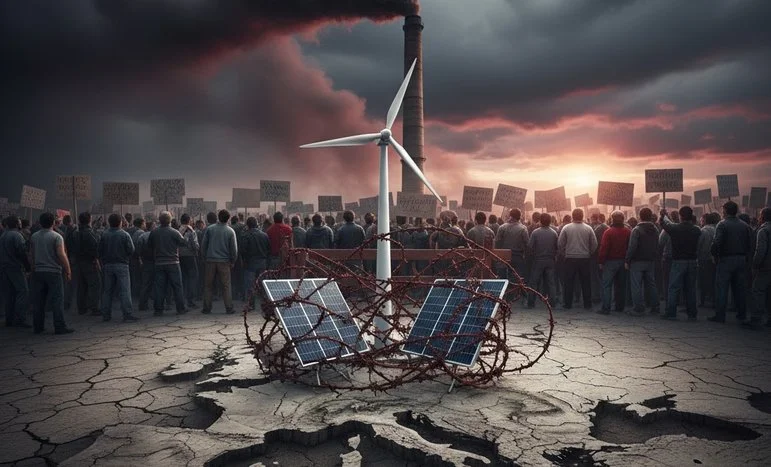
The intersection of environmental ambition and economic reality has reached a boiling point as the world moves through 2026. Across Europe and North America, a palpable shift in public sentiment has emerged, driven by the grinding pressure of inflation, stagnant wages, and energy prices that refuse to settle. While the necessity of addressing climate change remains a scientific consensus, the financial mechanics of doing so have sparked a fierce debate over “green affordability.” This economic strain is not just a statistical phenomenon; it has become a primary driver of skepticism toward climate mandates that were once viewed as settled policy. For the average household, the long-term promise of a carbon-neutral planet is increasingly being weighed against the immediate cost of the monthly grocery bill and heating expenses.
The pushback is particularly visible in the growing resentment toward renewable energy subsidies and carbon taxes. In many regions, these fiscal tools have been blamed for driving up the base cost of electricity, creating a ripple effect that touches every sector of the economy. Manufacturers, especially those in energy-intensive industries like chemicals and steel, are warning of a “green exodus” as they struggle to maintain competitive margins under heavy regulatory burdens. This has led to a narrative on social media and within industry circles that frames environmental policy as a source of short-term economic hardship—a luxury that many believe they can no longer afford in a time of fiscal precariousness.
Amidst this friction, however, a new focus has emerged that seeks to reconcile sustainability with economic logic: the circular economy. Search queries for circular economy solutions have skyrocketed by 111 percent, reflecting a desperate search for efficiency in an era of resource scarcity. This interest is driven by the realization that waste is not just an environmental problem, but a financial failure. Businesses are looking for ways to maximize the lifecycle of every material they touch, moving away from the traditional “take-make-dispose” model toward systems that prioritize repair, reuse, and closed-loop manufacturing. The circular economy represents a pragmatic middle ground, offering a path to sustainability that actually saves money rather than costing it.
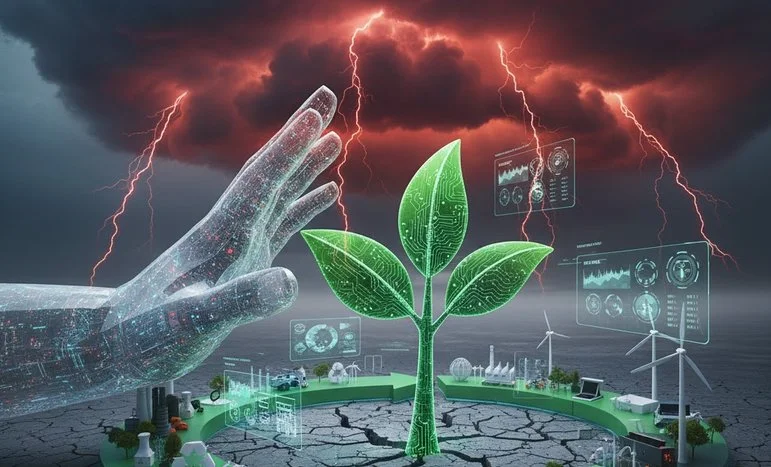
To manage the complexity of this shift, corporate boards are increasingly turning to the most powerful tool in their arsenal: generative artificial intelligence. AI is being integrated into climate strategies with a focus on precision and operational efficiency that was previously impossible. Predictive analytics are being deployed to monitor carbon footprints in real-time, optimize energy-hungry supply chains, and even discover new, sustainable materials through digital simulations. Boards are no longer treating AI as a “back-office” experiment but as a strategic frontier that can navigate the “triple bottom line” of profit, people, and planet. The goal is to use machine intelligence to find the hidden efficiencies that manual processes simply cannot uncover.
Despite these technological leaps, there remains a significant “value realization gap” that haunts many of these initiatives. While companies are deploying AI at a record pace, the measurable return on investment—both in terms of financial profit and carbon reduction—is often slow to materialize. Many organizations find themselves bogged down by fragmented data sources and legacy infrastructures that cannot support modern AI models. This has led to a period of “digital theater,” where companies announce ambitious AI-climate goals but struggle to implement them in a way that truly moves the needle. Bridging this gap requires more than just better software; it requires a cultural and structural transformation within the company itself.
The challenges to realizing value are multifaceted. High upfront costs for AI infrastructure and sustainable materials often clash with the immediate demands of quarterly earnings. Furthermore, there is a pervasive “AI skills gap,” as boards find they have the tools but lack the talent to steer them effectively. This friction is compounded by policy uncertainty; as governments oscillate between aggressive green mandates and economic relief measures, businesses are left in a state of strategic paralysis. Long-term planning is difficult when the regulatory landscape is shifting beneath one’s feet, leading many boards to adopt a cautious, incremental approach to sustainability that arguably fails to meet the urgency of the climate crisis.
This dynamic has created a selective market where investors are increasingly scrutinizing the difference between “greenwashing” and genuine value creation. The future belongs to those firms that can demonstrate environmental and economic performance in tandem. The rise of the circular economy and AI integration are not just trends; they are survival strategies for an era defined by radical uncertainty. Policymakers are also feeling the heat, as they are called upon to adjust subsidies and incentives to reduce the immediate financial burden on the public without abandoning the long-term goals of the Paris Agreement. It is a delicate balancing act that requires a move away from dogmatic policies toward more flexible, tech-enabled solutions.
The economic and policy implications of this pushback will likely dominate the global discourse for years to come. We are moving toward a more nuanced understanding of the green transition—one that acknowledges that environmental integrity cannot exist without fiscal responsibility. As search interest in resource optimization continues to grow, it is clear that the “green” label is no longer enough; a policy must also be “gold” in terms of its economic viability. The message from the boardrooms and the streets is the same: the only sustainable future is one that people can afford to live in.
Looking ahead, the success of these initiatives will depend on our ability to turn high-level innovation into tangible outcomes. Whether through AI-driven energy grids or blockchain-enabled material tracking, the technology exists to solve many of our most pressing problems. The hurdle is no longer the “how,” but the “how much” and “how fast.” As we navigate the complex intersection of climate and capital, the true leaders will be those who can harness the efficiency of the machine to protect the health of the planet without breaking the bank of the consumer.
We appreciate that not everyone can afford to pay for Views right now. That’s why we choose to keep our journalism open for everyone. If this is you, please continue to read for free.
But if you can, can we count on your support at this perilous time? Here are three good reasons to make the choice to fund us today.
1. Our quality, investigative journalism is a scrutinising force.
2. We are independent and have no billionaire owner controlling what we do, so your money directly powers our reporting.
3. It doesn’t cost much, and takes less time than it took to read this message.
Choose to support open, independent journalism on a monthly basis. Thank you.