Intel Leadership Shakeup Amid Government Stake
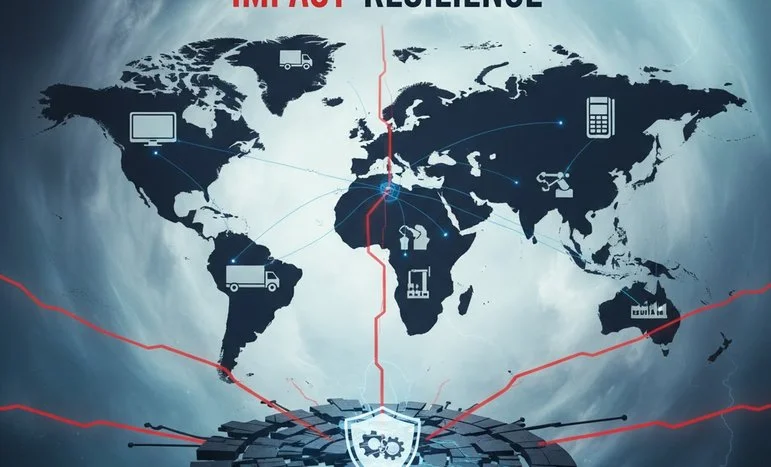

In September 2025, Intel Corporation finds itself at the epicenter of a historic restructuring that blurs the lines between private enterprise and state industrial policy. The recent leadership shakeup, characterized by the departure of one of its most prominent veterans and the rise of a new engineering guard, is occurring under the looming shadow of the U.S. government’s unprecedented 9.9% equity stake in the company. As CEO Lip-Bu Tan attempts to dismantle layers of corporate bureaucracy, he is simultaneously navigating a landscape where political considerations now carry as much weight as quarterly earnings.
The most visible sign of this transition is the departure of Michelle Johnston Holthaus, the CEO of Intel Products and a 30-year veteran of the company. Holthaus, who previously served as interim co-CEO during the transition following Pat Gelsinger’s departure, represents the “Old Intel.” Her exit signals a definitive end to a legacy era and paves the way for Lip-Bu Tan’s vision of a leaner, “engineering-first” organization. In her place, Tan has installed a slate of leaders with deep technical backgrounds, including Kevork Kechichian—a former Arm executive—to lead the Data Center Group, and Jim Johnson to head the Client Computing Group. These appointments are designed to pivot Intel away from its previous sprawling corporate structure toward specialized, agile silicon development.
A pivotal element of this reorganization is the creation of a new Central Engineering Group, led by Srinivasan “Srini” Iyengar, formerly of Cadence Design Systems. This group is tasked with unifying Intel’s horizontal engineering functions and, more critically, building a custom silicon business for external customers. This shift is essential if Intel is to succeed in its foundry ambitions—manufacturing chips for competitors like Nvidia or Apple—while also maintaining its own product roadmap. By centralizing engineering, Tan hopes to instill a culture of execution that has been lacking during Intel’s recent struggles to maintain its once-dominant position in semiconductor manufacturing.
However, Intel’s internal efforts are now inextricably linked to the Trump administration’s “Tech Nationalization” strategy. In August 2025, the U.S. government converted $11.1 billion in CHIPS Act grants and Secure Enclave funding into a 9.9% equity stake (roughly 433 million shares). This intervention, while providing Intel with a massive infusion of capital, has transformed the company into a “national security asset.” The deal includes a five-year warrant allowing the government to increase its stake to nearly 15% if Intel’s ownership of its foundry business drops below 51%, essentially tethering the company to U.S. soil and preventing any potential spin-off of its most valuable manufacturing assets to foreign entities.
This government involvement has introduced a new layer of volatility to Intel’s governance. Critics, including Senator Elizabeth Warren, have questioned the risks to taxpayers, noting that the government is now a passive owner in a company facing severe market competition and declining revenue. Meanwhile, President Trump’s public calls for Tan’s resignation over alleged conflicts of interest in China—which Tan eventually smoothed over in a White House visit—demonstrate the degree to which Intel’s C-suite is now subject to political whims. The “golden share” and equity-based industrial policy mean that Intel’s board must now consider national policy objectives, such as domestic job creation and supply chain security, alongside global market competitiveness.
For the broader tech sector, Intel’s trajectory serves as a bellwether for the future of critical industries. The intersection of leadership overhauls and state equity marks a departure from the traditional hands-off approach of Western capitalism. While the government’s stake provides Intel with the stability needed to build out its $100 billion domestic expansion, it also limits its operational freedom. International partners may now view Intel through a geopolitical lens, potentially complicating its ability to operate in markets that are at odds with U.S. trade policy.
Ultimately, Intel’s success will depend on whether its new leadership can translate government-backed stability into technological leadership. The 18A process node, once the company’s “holy grail,” is being deprioritized in favor of a pivot toward the 14A process—a move intended to win back major customers like Apple. If Kechichian and Iyengar can deliver these next-generation chips on schedule, Intel may yet reclaim its crown. However, the company is no longer just fighting a battle of transistors and yields; it is navigating a complex geopolitical “rollercoaster” where the U.S. government is both its most powerful protector and its most demanding shareholder.
We appreciate that not everyone can afford to pay for Views right now. That’s why we choose to keep our journalism open for everyone. If this is you, please continue to read for free.
But if you can, can we count on your support at this perilous time? Here are three good reasons to make the choice to fund us today.
1. Our quality, investigative journalism is a scrutinising force.
2. We are independent and have no billionaire owner controlling what we do, so your money directly powers our reporting.
3. It doesn’t cost much, and takes less time than it took to read this message.
Choose to support open, independent journalism on a monthly basis. Thank you.