India’s Miscalculated Shift Toward Russia and China Risks a Strategic Dead-End

India’s foreign policy trajectory in recent years has reflected an increasingly complex balancing act, shaped by shifting global dynamics, economic pressures, and evolving strategic priorities. In the aftermath of global trade disruptions and tariff tensions, New Delhi has sought to diversify its partnerships and reduce overdependence on any single bloc. This approach has, in part, led to a visible effort to deepen engagement with Russia and China, with the underlying assumption that a triangular understanding among these major powers could provide India with greater strategic autonomy. The idea was not necessarily to replace existing partnerships, but to create a broader framework in which India could navigate an increasingly multipolar world with flexibility and resilience.
However, the practical outcomes of this approach reveal a far more complicated reality. While diplomatic engagements between India and China have continued at various levels, the underlying strategic mistrust has not diminished. Border tensions, differing regional ambitions, and competing spheres of influence continue to define the relationship. China’s enduring partnership with Pakistan remains a central concern for India, reinforcing the perception that Beijing’s long-term strategy in South Asia is not aligned with Indian interests. This dynamic becomes even more pronounced when viewed in the context of China’s broader geopolitical positioning, where its partnerships are often guided by long-term strategic calculations rather than short-term diplomatic engagements.
Recent developments further underscore this reality. Symbolic gestures and strategic signaling from China, including high-profile visits to sensitive regions, carry implications that extend beyond their immediate context. For India, areas such as Tibet are not merely geographic neighbors but hold deep historical and geopolitical significance. Actions that highlight China’s control and presence in such regions can be interpreted as assertions of power that do not necessarily take Indian sensitivities into account. These signals, whether intended as internal messaging or external projection, contribute to an environment in which trust remains limited and strategic alignment appears increasingly unlikely.
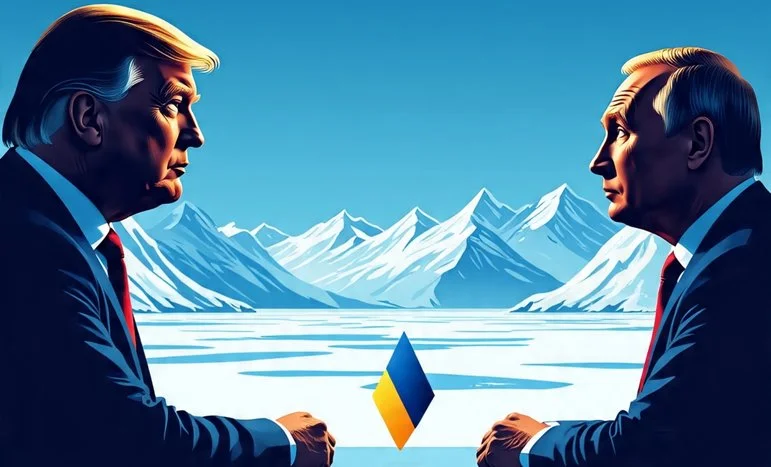
Russia’s position within this equation adds another layer of complexity. Historically, India and Russia have shared a strong and mutually beneficial relationship, particularly in the areas of defense and energy cooperation. This partnership has been a cornerstone of India’s foreign policy for decades, providing a sense of continuity and reliability. However, recent global developments have altered the context in which this relationship operates. The ongoing conflict in Ukraine and the resulting geopolitical shifts have drawn Russia closer to China, both economically and strategically. As Western sanctions have constrained Moscow’s options, Beijing has emerged as a critical partner, reshaping the balance within the Russia-China-India triangle.
For India, this evolving dynamic presents a challenge. While Russia continues to value its relationship with India, its growing dependence on China inevitably influences its strategic priorities. This does not necessarily diminish the importance of India in Russian calculations, but it does suggest that the relative weight of the partnership may be shifting. In a scenario where Russia’s alignment with China deepens further, India’s ability to leverage its relationship with Moscow as a counterbalance could be limited. This raises questions about the long-term viability of relying on Russia as a key pillar in a strategy aimed at balancing Chinese influence.
At the same time, India’s relationship with the West remains a critical component of its global positioning. Partnerships with Western countries have played a significant role in advancing India’s capabilities in technology, defense, and economic development. Access to advanced technologies, investment flows, and collaborative frameworks has contributed to India’s growth trajectory and its emergence as a major global player. Any significant distancing from these partnerships could have far-reaching implications, particularly in a world where innovation and economic integration are key drivers of national power.
The risks associated with a potential drift away from Western engagement are not merely theoretical. Reduced access to technological collaboration and financial networks could slow India’s development at a time when global competition is intensifying. Furthermore, an overreliance on a limited set of partners, especially those with divergent strategic interests, could constrain India’s ability to pursue an independent and diversified foreign policy. In such a scenario, the goal of strategic autonomy could paradoxically lead to a form of strategic limitation, where options become narrower rather than broader.
India’s approach, therefore, must be understood as an ongoing process of recalibration rather than a fixed alignment. The pursuit of balance in international relations is inherently complex, requiring constant adjustment in response to changing circumstances. While engagement with Russia and China remains an important aspect of this strategy, it cannot fully substitute the benefits derived from broader global partnerships. The challenge lies in maintaining constructive relationships across multiple axes without compromising core national interests or long-term objectives.
It is also important to consider the broader context in which these decisions are made. The global order is undergoing significant transformation, with traditional power structures being reshaped and new centers of influence emerging. In such an environment, countries like India are seeking to assert greater agency, navigating between established powers while pursuing their own developmental goals. This requires a nuanced understanding of both opportunities and risks, as well as the ability to adapt to rapidly changing conditions.
The notion of a stable triangular cooperation between India, Russia, and China, while appealing in theory, faces substantial practical limitations. Divergent interests, historical tensions, and shifting alliances make such an arrangement difficult to sustain in a meaningful way. China’s strategic priorities, particularly in relation to its regional ambitions and partnerships, do not align with India’s vision of a balanced and cooperative framework. Similarly, Russia’s evolving position within the global system introduces uncertainties that complicate its role as a reliable counterweight.
In this context, India’s foreign policy must continue to emphasize diversification and flexibility. Strengthening ties with a wide range of partners, including those in the West, Asia, and beyond, can help mitigate risks and enhance resilience. This does not require abandoning engagement with Russia or China, but rather integrating these relationships into a broader and more balanced framework. By doing so, India can better navigate the complexities of the current geopolitical landscape while preserving its strategic autonomy.
Ultimately, the effectiveness of India’s foreign policy will depend on its ability to align short-term tactics with long-term objectives. The pursuit of balance is not an end in itself but a means to achieve sustainable growth, security, and influence. Recognizing the limitations of certain approaches and adapting accordingly is a crucial part of this process. As global dynamics continue to evolve, India’s choices will play a significant role in shaping not only its own future but also the broader trajectory of international relations.
References
We appreciate that not everyone can afford to pay for Views right now. That’s why we choose to keep our journalism open for everyone. If this is you, please continue to read for free.
But if you can, can we count on your support at this perilous time? Here are three good reasons to make the choice to fund us today.
1. Our quality, investigative journalism is a scrutinising force.
2. We are independent and have no billionaire owner controlling what we do, so your money directly powers our reporting.
3. It doesn’t cost much, and takes less time than it took to read this message.
Choose to support open, independent journalism on a monthly basis. Thank you.