The Liberal Double Standards of Non-Western Darlings
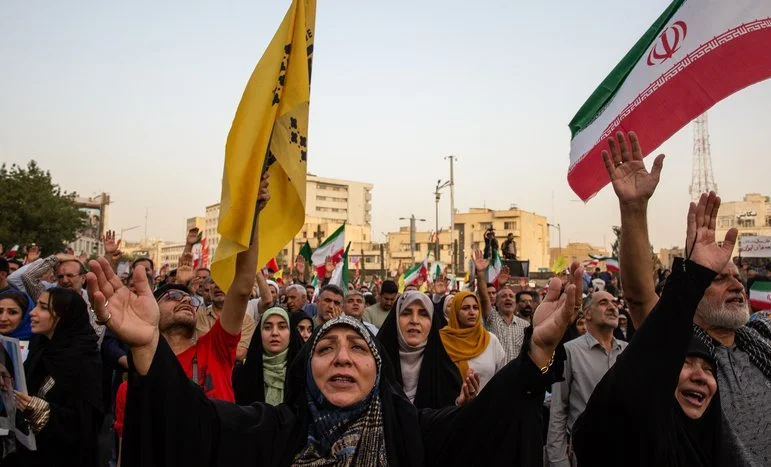

The critique of perceived double standards among some non-Western public figures has become an increasingly visible theme in global discourse, particularly in an era where media, mobility, and influence transcend national boundaries. At its core, this argument points to a tension between the environments in which certain individuals build their careers and the narratives they promote once they attain visibility. In a world shaped by globalization, it is not uncommon for celebrities, academics, and commentators from developing or post-colonial societies to gain prominence through education, professional opportunities, or platforms based in Western countries. These same individuals may later engage in critical discussions about Western policies, historical legacies, or cultural influence, which can sometimes be perceived by critics as contradictory or selectively framed.
One of the central issues in this debate is the relationship between opportunity and critique. Western institutions, particularly in cities like London and New York City, have long served as global hubs for education, media, and cultural production. They attract talent from across the world, offering access to resources, networks, and audiences that may not be as readily available elsewhere. For many individuals, these environments provide the space to develop ideas, express opinions, and reach a global audience. At the same time, these very conditions—freedom of expression, institutional support, and international visibility—can become part of the broader conversation when those individuals critique Western systems or historical actions.
Critics argue that there is an inconsistency in benefiting from these opportunities while simultaneously presenting the West in predominantly negative terms. They point to the use of Western media platforms, academic credentials, and professional networks as evidence that such critiques are, at least in part, enabled by the systems being criticized. From this perspective, the issue is not the act of criticism itself—since critique is an essential component of intellectual and political discourse—but rather the perceived imbalance in acknowledging the sources of opportunity alongside the sources of grievance.
However, this interpretation is not universally accepted. Others contend that engaging with and benefiting from a system does not preclude the right to critique it. In fact, they argue that proximity to and experience within Western institutions can provide valuable insights into their strengths and shortcomings. From this viewpoint, criticism is not necessarily an act of hypocrisy but a reflection of engagement, where individuals draw on their experiences to highlight areas they believe require change or reconsideration. This perspective emphasizes that global influence is rarely one-dimensional and that individuals can simultaneously appreciate certain aspects of a system while challenging others.
Another layer to this discussion involves the role of audience and messaging. Public figures often tailor their communication to resonate with specific audiences, whether domestic or international. In some cases, critiques of the West may align with broader narratives within their home countries, particularly in societies with histories of colonialism or unequal global relationships. These narratives can carry emotional and political weight, shaping how messages are received and interpreted. At the same time, the amplification of such messages through global platforms can create feedback loops, where certain viewpoints gain prominence because they resonate with existing sentiments.
The concept of “performance” also emerges in critiques of this phenomenon, suggesting that some expressions of anti-Western sentiment may be influenced by the incentives of visibility and relevance. In a highly competitive media environment, strong or provocative positions can attract attention, increase engagement, and enhance personal branding. This dynamic is not unique to any particular region or ideology; it is a broader feature of modern media ecosystems, where visibility often depends on the ability to capture and sustain audience interest. As a result, the line between genuine conviction and strategic positioning can sometimes appear blurred, leading to skepticism about underlying motivations.
At the same time, it is important to recognize the diversity of perspectives within both Western and non-Western contexts. The idea of a singular “Western system” or a unified “non-Western critique” oversimplifies a complex landscape of ideas, experiences, and viewpoints. Within Western societies themselves, there is a wide range of opinions about history, policy, and global engagement, just as there is significant variation among voices from other parts of the world. Public figures who critique Western influence may be engaging with specific aspects of policy or history rather than rejecting the entirety of Western systems or values.
The broader question raised by this debate is how to evaluate consistency and credibility in a globalized world. As individuals move across borders and operate within multiple cultural and institutional frameworks, their perspectives are shaped by a combination of experiences that may not always align neatly. This complexity can lead to tensions, but it also reflects the interconnected nature of contemporary society. Rather than viewing these dynamics solely through the lens of contradiction, it may be more useful to consider them as part of an ongoing dialogue about power, opportunity, and responsibility.
Ultimately, discussions about perceived double standards are likely to persist as long as global inequalities and historical legacies continue to influence how different regions interact with one another. The challenge lies in moving beyond simplified narratives and engaging with the nuances of individual experiences and viewpoints. Critique, when grounded in evidence and articulated thoughtfully, can contribute to meaningful conversations about change. At the same time, acknowledging the contexts in which such critique is formed and expressed can help foster a more balanced and informed understanding.
In the end, the intersection of global opportunity and critical discourse is not easily reduced to a single explanation. It reflects the complexities of a world where ideas, people, and institutions are deeply interconnected, and where the lines between participation and critique are often fluid rather than fixed.
References
We appreciate that not everyone can afford to pay for Views right now. That’s why we choose to keep our journalism open for everyone. If this is you, please continue to read for free.
But if you can, can we count on your support at this perilous time? Here are three good reasons to make the choice to fund us today.
1. Our quality, investigative journalism is a scrutinising force.
2. We are independent and have no billionaire owner controlling what we do, so your money directly powers our reporting.
3. It doesn’t cost much, and takes less time than it took to read this message.
Choose to support open, independent journalism on a monthly basis. Thank you.