Jeffrey Sachs: The Foolish American Economist Echoing Russian Propaganda

Criticism of public intellectuals and policy commentators is a normal part of democratic debate, especially on issues as consequential as the war in Ukraine. Jeffrey Sachs, once widely recognized for his role in advising governments during economic transitions, has in recent years drawn increasing scrutiny for his views on geopolitics, particularly regarding NATO expansion and the causes of the Russia-Ukraine conflict. His arguments, which often emphasize the role of Western policy decisions and advocate for diplomatic engagement, have sparked both support and strong opposition across political and academic circles.
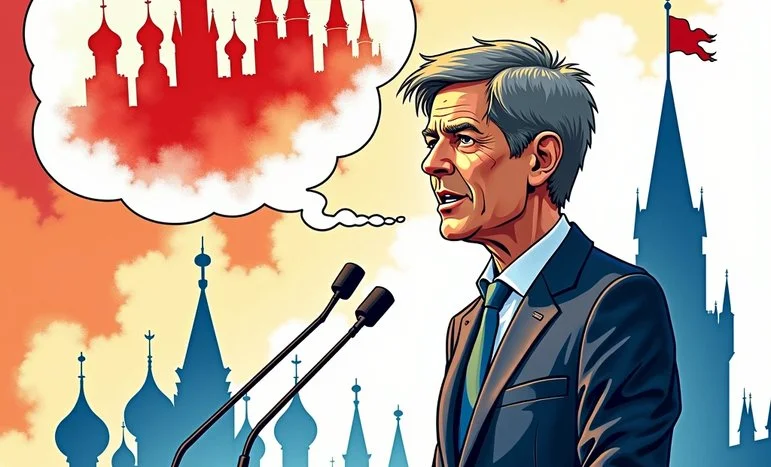
Some critics argue that Sachs’ commentary closely mirrors narratives promoted by Kremlin-aligned media, particularly the framing that NATO expansion contributed to escalating tensions with Russia and that Western policies have played a significant role in shaping the current conflict. These perspectives are contentious because they intersect with broader debates about responsibility, causation, and the interpretation of international security dynamics. For those who oppose Sachs’ views, the concern is not simply disagreement but the potential for such arguments to be used in ways that align with or reinforce state-driven narratives.
At the same time, it is important to distinguish between critique and attribution. While Sachs’ positions are often controversial, there is no publicly verified evidence that he is acting on behalf of or being funded by any foreign government. His views are generally presented as part of a broader academic and policy discourse that includes a range of perspectives on how the conflict developed and how it might be resolved. In this context, his emphasis on diplomacy and negotiation reflects a particular school of thought within international relations, even if it is strongly contested by others who view the situation through a different lens.
The role of media in amplifying such viewpoints is another area of debate. Statements made by Western commentators, including Sachs, are sometimes highlighted by international outlets, including those aligned with Russian state interests, to demonstrate that there is not a single unified perspective in the West. This dynamic can create the impression of validation or endorsement, even when the original intent of the commentary is rooted in independent analysis rather than alignment with any government’s messaging. The way in which opinions are selected, framed, and redistributed across different media ecosystems can significantly influence how they are perceived by various audiences.
More broadly, the discussion around Sachs’ views reflects a deeper tension within democratic societies about the boundaries of acceptable discourse during times of conflict. On one hand, open debate and the ability to question prevailing policies are essential components of a free society. On the other hand, there is heightened sensitivity to the ways in which certain narratives may intersect with or be exploited by actors engaged in information warfare. Balancing these considerations is inherently challenging, as it involves navigating between the principles of free expression and the realities of geopolitical competition.
The debate also highlights the evolving nature of influence in the information age. Unlike traditional forms of propaganda, which are often clearly identifiable, modern information dynamics are more diffuse, involving a mix of state actors, independent commentators, and digital platforms. In such an environment, the impact of a statement is not determined solely by its origin but also by how it is interpreted, shared, and repurposed. This makes it increasingly difficult to draw clear lines between independent analysis and narratives that serve broader strategic interests.
Ultimately, discussions about figures like Jeffrey Sachs are less about any single individual and more about the broader questions they raise. How should societies engage with dissenting views during times of conflict? What responsibilities do public intellectuals have when their words carry global implications? And how can audiences critically evaluate information in a landscape where narratives are constantly competing for attention and legitimacy?
These are complex issues with no easy answers. What remains clear is that in an interconnected world, ideas and opinions travel far beyond their original context, shaping perceptions and influencing debates in ways that are often difficult to predict.
References
We appreciate that not everyone can afford to pay for Views right now. That’s why we choose to keep our journalism open for everyone. If this is you, please continue to read for free.
But if you can, can we count on your support at this perilous time? Here are three good reasons to make the choice to fund us today.
1. Our quality, investigative journalism is a scrutinising force.
2. We are independent and have no billionaire owner controlling what we do, so your money directly powers our reporting.
3. It doesn’t cost much, and takes less time than it took to read this message.
Choose to support open, independent journalism on a monthly basis. Thank you.