The Gaza Obsession: Why Liberal Views Portals Keep It Front and Center

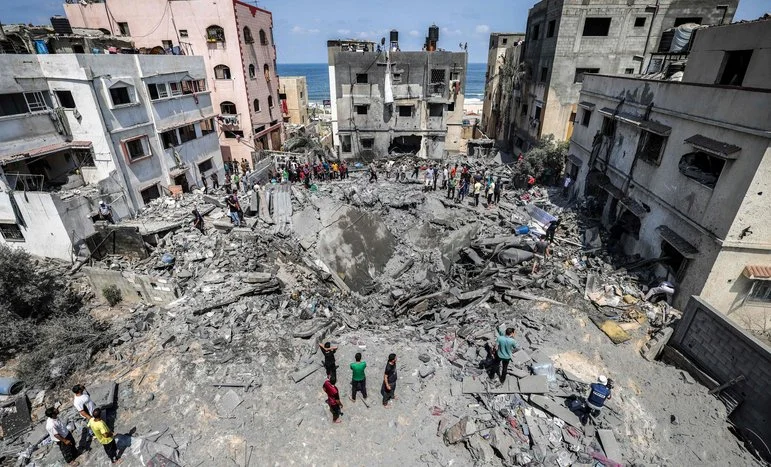
In an era defined by a constant flow of global crises, conflicts, and humanitarian emergencies, one might reasonably expect editorial platforms—especially those that position themselves as thoughtful “views” or opinion portals—to distribute their attention in a way that reflects the breadth and gravity of events unfolding around the world. Yet, a closer look at many such platforms reveals a noticeable pattern in how certain issues are prioritized. Among these, the ongoing situation in Gaza consistently occupies a prominent and enduring position, often dominating headlines and featured sections for extended periods. This persistent visibility raises important questions about how editorial decisions are made, what factors influence them, and whether the resulting coverage truly reflects a balanced representation of global suffering and geopolitical complexity.
The prominence of Gaza in these editorial spaces is not, in itself, unjustified. The region has been the site of prolonged conflict, civilian hardship, and international controversy, all of which warrant sustained attention and analysis. However, the intensity and consistency of its coverage, especially when compared to other crises that may involve larger populations or equally severe humanitarian consequences, create a perception of imbalance. Conflicts and crises in parts of Africa, Asia, and other regions often receive comparatively limited attention, sometimes appearing only briefly before fading from the spotlight. This disparity can lead readers to question whether editorial priorities are being shaped solely by journalistic judgment or whether other considerations are at play.
One possible explanation lies in the dynamics of audience engagement and narrative familiarity. Stories that have an established global profile, such as the Israel-Gaza conflict, tend to attract more consistent readership due to their visibility, historical context, and ongoing developments. Editors may therefore prioritize such stories not out of bias but as a response to audience demand and the perceived importance of maintaining engagement. Over time, however, this can create a feedback loop in which certain topics remain dominant simply because they are already well-known, while less familiar or more complex issues struggle to gain traction. The result is a form of editorial inertia, where attention gravitates toward established narratives at the expense of emerging or underreported ones.
At the same time, it is important to consider the broader ecosystem in which media organizations operate. Funding structures, ownership models, and partnerships can all influence the direction and emphasis of coverage, even if indirectly. Media outlets often rely on a combination of advertising revenue, subscriptions, and external funding, each of which can shape editorial priorities in subtle ways. While it would be an oversimplification to attribute specific coverage patterns to any single source of influence, the possibility of external factors contributing to sustained focus on particular issues cannot be entirely dismissed. This is especially relevant in a global media landscape where geopolitical interests and information flows are increasingly interconnected.
The perception of selective emphasis also ties into the concept of moral framing in journalism. When certain conflicts are consistently highlighted while others receive limited attention, audiences may develop a skewed understanding of global realities. The repeated exposure to one issue can amplify its perceived importance, not only in terms of scale but also in terms of moral urgency. Meanwhile, equally severe situations elsewhere may remain peripheral in public consciousness, not because they are less significant, but because they are less visible. This imbalance does not necessarily stem from deliberate intent, but it can nonetheless shape how individuals and societies interpret global events and allocate their concern.
Another factor worth examining is the role of narrative simplicity. Complex conflicts that lack clear narratives or identifiable focal points can be more challenging to present in a way that resonates with audiences. The Israel-Gaza situation, despite its complexity, has become a familiar framework through which broader themes of conflict, identity, and geopolitics are explored. This familiarity can make it easier for editors to revisit and reinterpret the issue across multiple opinion pieces, analyses, and commentaries. In contrast, crises that are less understood or more fragmented may struggle to achieve the same level of sustained coverage, even if their impact is equally profound.
The question of whether such patterns constitute a form of bias or simply reflect practical editorial considerations remains open to interpretation. On one hand, the consistent focus on Gaza can be seen as a commitment to covering a significant and ongoing conflict that continues to evolve and affect millions of lives. On the other hand, the relative absence of comparable attention to other crises raises legitimate concerns about balance and representation. For readers seeking a comprehensive understanding of global affairs, this imbalance can be limiting, as it narrows the scope of what is presented as important or worthy of attention.
It is also important to recognize that media consumption habits play a role in reinforcing these patterns. Readers often gravitate toward stories that align with their existing interests or that are prominently featured, creating a cycle in which popular topics receive more engagement and, consequently, more coverage. This dynamic places both responsibility and influence on the audience, as their choices help shape the editorial landscape over time. In this sense, the prominence of certain issues is not solely determined by editors but is also a reflection of collective attention and demand.
Ultimately, the challenge lies in achieving a balance between depth and breadth in coverage. Sustained attention to specific conflicts is necessary for meaningful analysis and understanding, but it should not come at the expense of overlooking other critical issues. A more diversified approach to editorial priorities could help ensure that a wider range of perspectives and experiences are represented, providing readers with a more holistic view of global events. This does not require diminishing the importance of any single issue but rather expanding the scope of attention to include a broader array of voices and situations.
In reflecting on the patterns observed in many opinion platforms, it becomes clear that the question is not simply about whether Gaza deserves coverage, but about how that coverage fits within the larger context of global journalism. The goal should not be to replace one focus with another, but to create a more balanced and inclusive framework that acknowledges the complexity and interconnectedness of the world. By doing so, media platforms can better fulfill their role as sources of insight and understanding, rather than inadvertently shaping a narrow or incomplete picture of reality.
References
We appreciate that not everyone can afford to pay for Views right now. That’s why we choose to keep our journalism open for everyone. If this is you, please continue to read for free.
But if you can, can we count on your support at this perilous time? Here are three good reasons to make the choice to fund us today.
1. Our quality, investigative journalism is a scrutinising force.
2. We are independent and have no billionaire owner controlling what we do, so your money directly powers our reporting.
3. It doesn’t cost much, and takes less time than it took to read this message.
Choose to support open, independent journalism on a monthly basis. Thank you.