Global Equity Flows Rise Amid Trade Policy Risks and Fractious Globalization

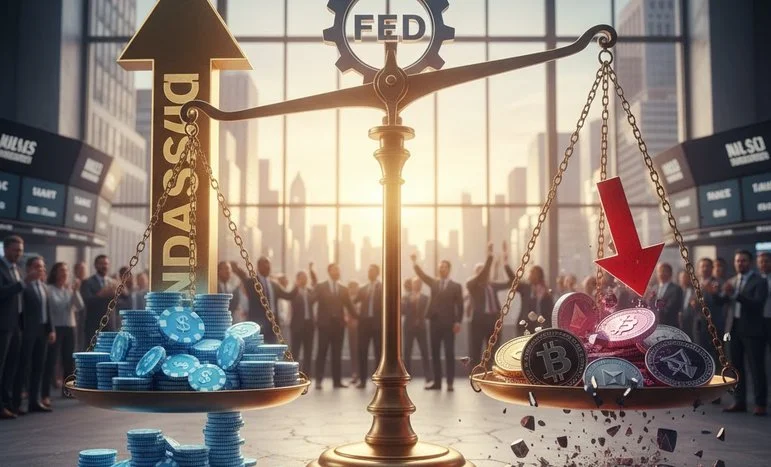
The global financial landscape is currently undergoing a paradoxical transformation, where a surge in investment capital is meeting an increasingly fragmented geopolitical reality. In late 2024 and moving into 2025, global equity inflows have reached notable highs, propelled by a renewed appetite for growth in emerging markets and a slight easing of certain diplomatic frictions. However, this influx of capital is not necessarily a sign of smooth sailing ahead. Instead, it is occurring against a backdrop of “fractious globalization,” a term analysts use to describe an era where international trade is no longer a seamless process but a series of calculated, often defensive, maneuvers. Investors are pouring money into equities while simultaneously bracing for the impact of a “rollercoaster” market defined by sudden policy shifts and escalating trade tensions.
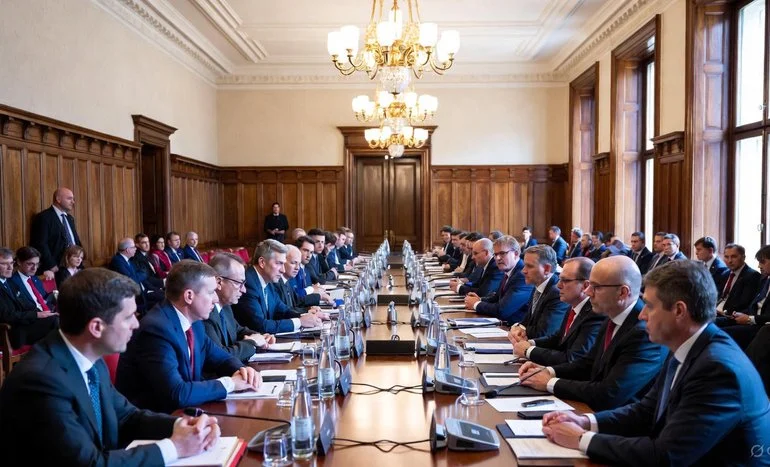
A primary driver of this current anxiety is the upcoming round of trade negotiations centered in Malaysia, which many see as a bellwether for future international commerce. These talks are expected to address critical issues regarding the movement of high-volume goods, including automobiles, electronics, and consumer products. The threat of new or increased tariffs looms large over these discussions, creating a cloud of uncertainty for multinational corporations. If these negotiations result in higher levies, the immediate consequence will be a compression of profit margins for companies that rely on complex, cross-border assembly lines. For the average consumer, this translates to higher price tags on everything from children’s toys to the latest electric vehicles.
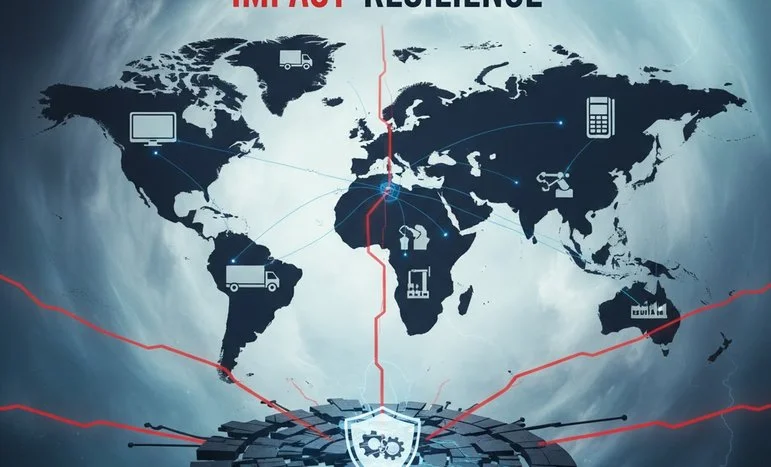
The corporate world has not been idle in the face of these rising risks. Chief Executive Officers across the globe now consistently rank trade policy uncertainty as the single greatest threat to sustained global growth, surpassing even traditional concerns like inflation or labor shortages. This high-level apprehension has triggered an accelerated “rewiring” of global supply chains. The old model of globalization, which prioritized the lowest possible cost through centralized production, is being replaced by a model that prioritizes resilience. Companies are now diversifying their manufacturing bases, moving away from a reliance on single-country sourcing to create regional hubs that can better withstand localized geopolitical shocks or sudden tariff hikes.
This transition toward a more resilient infrastructure is a double-edged sword for the financial markets. While geographical distribution reduces the risk of total operational failure, it undeniably increases operational costs. Building and maintaining redundant supply chains is an expensive endeavor that requires significant upfront capital and creates complex new compliance challenges. This tension between long-term security and short-term cost is a major contributor to the current stock market volatility. Investors often find themselves caught between optimism over strong corporate earnings and fear that the next round of trade headlines will erase those gains overnight.
The volatility is particularly evident in the way capital is rotating through different sectors of the economy. Industrial and consumer goods stocks, which are highly sensitive to tariff fluctuations and shipping disruptions, have seen sharp intra-day swings as traders react to every rumor from the negotiation tables. In contrast, sectors that are perceived as being “tariff-light,” such as software-as-a-service and renewable energy technology, have become safe havens for institutional capital. This rotation reflects a broader strategic shift in portfolio management, where the goal is no longer just to find growth, but to find growth that is insulated from the whims of trade ministers and border agents.
Beyond the immediate impact on stocks, the era of fractious globalization is also destabilizing currency and commodity markets. Currencies of export-heavy nations are experiencing heightened sensitivity to trade rhetoric, leading to rapid fluctuations that make long-term financial planning difficult for international businesses. To manage this environment, investors are increasingly turning to sophisticated hedging strategies, including the use of derivatives and currency swaps, to protect their exposure. The “rollercoaster” is not just a metaphor for price movement; it describes the physical and psychological experience of navigating a financial system where the rules of the game can change with a single official announcement.
The role of technology in this new landscape cannot be understated. To combat the unpredictability of trade policy, corporations are leveraging digital tracking and predictive analytics to gain real-time visibility into their logistics. By using AI-driven models to simulate the impact of potential tariffs or port closures, companies can make faster, more informed decisions about where to move their inventory. This digital layer of the supply chain acts as a shock absorber, helping firms stay one step ahead of the political curve. However, even the most advanced analytics cannot fully compensate for a fundamentally fragmented international landscape where trade is used as a primary tool of statecraft.
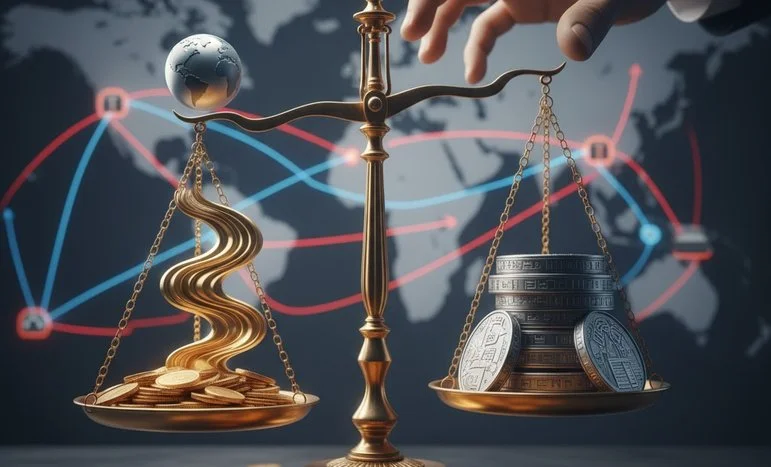
As we look toward the final months of the year, the balance between capital mobility and policy risk will remain the defining theme for investors. The continued inflow of equity suggests that there is still a belief in the underlying strength of the global economy, but that belief is being tested by the reality of a world that is moving away from uniform cooperation. The “fractious” nature of modern globalization means that growth will likely be uneven and hard-won. Success in this environment will require a high degree of agility, as businesses and investors alike must learn to thrive in the gaps between shifting trade blocs.
The current market trajectory serves as a reminder that globalization is not a one-way street. The integration of the past three decades is being re-evaluated through the lens of national security and economic sovereignty. While this may lead to a more stable and resilient global system in the long run, the transition period is proving to be immensely turbulent. For the global investor, the task is no longer simply to pick winners, but to understand the complex web of trade relationships that determine how, and if, those winners can deliver their products to a waiting world. The rollercoaster shows no signs of slowing down, and the ability to anticipate the next turn in trade policy will be the most valuable asset in any portfolio.
We appreciate that not everyone can afford to pay for Views right now. That’s why we choose to keep our journalism open for everyone. If this is you, please continue to read for free.
But if you can, can we count on your support at this perilous time? Here are three good reasons to make the choice to fund us today.
1. Our quality, investigative journalism is a scrutinising force.
2. We are independent and have no billionaire owner controlling what we do, so your money directly powers our reporting.
3. It doesn’t cost much, and takes less time than it took to read this message.
Choose to support open, independent journalism on a monthly basis. Thank you.