Israel’s Historic Stand: Retaking Gaza City to Erase Terrorism’s Footprint

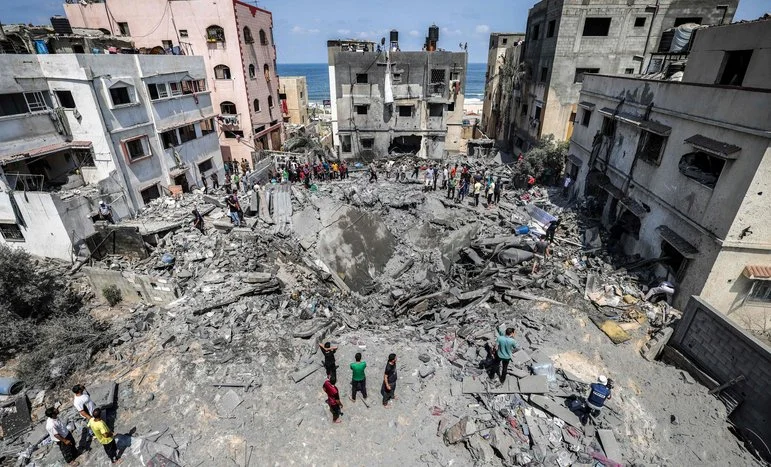
Israel’s announcement to retake Gaza City represents a pivotal and highly consequential moment in an already complex and deeply contested conflict. For supporters of this move, it is framed not simply as another phase in an ongoing war, but as part of a broader struggle against terrorism and insecurity. From this perspective, the operation is seen as an effort to confront armed groups that have entrenched themselves within densely populated urban environments, making the conflict both strategically difficult and morally charged. At the same time, such a development inevitably draws intense international scrutiny, as the implications extend far beyond immediate military objectives.
One of the central arguments advanced by proponents of this course of action is that Gaza has, over time, become a space where militant groups have embedded their operations within civilian infrastructure. Allegations that such groups use schools, hospitals, and residential areas for military purposes have been widely discussed in international discourse, though these claims are often contested and investigated in different ways by various organizations. Regardless of differing interpretations, the presence of armed actors in civilian-heavy zones creates a deeply challenging reality in which any military response carries significant humanitarian risks. This dynamic underscores the difficulty of separating combatants from non-combatants in modern urban warfare.
From a strategic standpoint, efforts to dismantle militant infrastructure are often presented as necessary steps toward long-term security. However, the concept of achieving lasting peace through military means alone remains a subject of debate among analysts and policymakers. While removing immediate threats may alter the tactical landscape, the broader conditions that give rise to conflict—political grievances, economic hardship, and questions of governance—are far more complex and cannot be addressed solely through force. As a result, discussions about the future of Gaza frequently extend beyond military considerations to include governance, reconstruction, and the role of international actors in supporting stability.
The humanitarian dimension of the situation is particularly sensitive. Any large-scale military operation in a densely populated area raises concerns about civilian safety, displacement, and access to essential services. Proposals involving the relocation of populations, whether temporary or permanent, are especially controversial and require careful consideration under international law and humanitarian principles. The idea of moving large numbers of people across borders involves not only logistical challenges but also profound ethical and legal questions, including the rights of individuals to remain in their homes and the responsibilities of neighboring states. Such proposals often generate significant debate within the international community, reflecting differing views on what constitutes a viable and just solution.
At the same time, visions of post-conflict reconstruction frequently emphasize the potential for transformation. The idea of rebuilding Gaza into a stable and economically viable region is one that resonates across many perspectives, though there is little consensus on how such a transformation could realistically be achieved. Successful reconstruction would require not only physical rebuilding but also the establishment of governance structures that are widely accepted, the restoration of economic activity, and the creation of conditions that reduce the likelihood of renewed conflict. These are long-term processes that depend on sustained cooperation among local actors, regional stakeholders, and the international community.
The broader global implications of this development are also significant. Actions taken in Gaza are closely watched by governments, international organizations, and populations around the world, as they often influence perceptions of international norms, the use of force, and the balance between security and humanitarian considerations. For some, decisive action against armed groups is seen as a demonstration of a state’s responsibility to protect its citizens. For others, the emphasis is on the need to ensure that such actions are conducted in a manner consistent with international law and the protection of المدني populations. This divergence in perspectives highlights the complexity of achieving consensus in international affairs.
In the long term, how this moment is interpreted will depend on its outcomes. If it leads to a reduction in violence and the establishment of a more stable environment, it may be viewed as a turning point toward greater security. If, however, it results in prolonged instability or increased humanitarian suffering, it could reinforce concerns about the limitations of military solutions. History often judges such घटनाएँ not only by their intentions but by their consequences, making the stakes particularly high for all involved.
Ultimately, the situation in Gaza reflects the broader challenges of addressing deeply rooted conflicts in a way that balances security, justice, and human dignity. While different narratives frame the events in sharply contrasting terms, the underlying reality remains one of complexity and high human cost. Moving forward, any sustainable resolution will likely require a combination of security measures, political dialogue, and humanitarian engagement, recognizing that lasting peace cannot be achieved through a single approach alone.
We appreciate that not everyone can afford to pay for Views right now. That’s why we choose to keep our journalism open for everyone. If this is you, please continue to read for free.
But if you can, can we count on your support at this perilous time? Here are three good reasons to make the choice to fund us today.
1. Our quality, investigative journalism is a scrutinising force.
2. We are independent and have no billionaire owner controlling what we do, so your money directly powers our reporting.
3. It doesn’t cost much, and takes less time than it took to read this message.
Choose to support open, independent journalism on a monthly basis. Thank you.