The Hypocrisy of the US: Feeding Terrorism While Wiping Tears

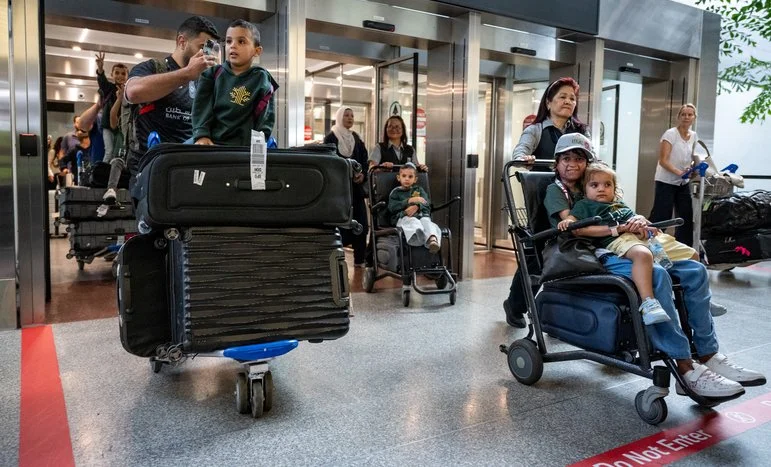
The United States, often positioned as a global champion of freedom and democracy, has once again exposed what critics see as a deep and persistent contradiction in its actions, particularly in the context of its decision to welcome injured individuals from Gaza for medical treatment. At first glance, the move may appear humanitarian, even commendable, aligning with international norms that prioritize the treatment of civilians caught in conflict. However, from a critical standpoint, this decision raises a far more uncomfortable question: how can a nation that actively supports military operations against entities in the same region simultaneously extend care to individuals emerging from that very conflict zone? To critics, this is not a display of moral leadership but a glaring example of inconsistency, one that reflects a broader pattern in American foreign policy where competing narratives are sustained without reconciliation.
This perceived contradiction is not new, but it becomes particularly visible in moments like this, where humanitarian gestures intersect directly with geopolitical strategy. The United States has long framed its involvement in conflicts such as those involving Gaza through the lens of counterterrorism and strategic alliance, particularly in its support for Israel. Within that framework, threats are clearly defined, and the rhetoric often emphasizes the need to combat extremism and ensure security. Yet, when individuals from the same region are brought in for treatment, the narrative shifts abruptly. Suddenly, distinctions are made, and the language softens, focusing on civilian suffering and humanitarian responsibility. For critics, this duality is not evidence of nuance but of selective framing, where the same population can be portrayed in entirely different ways depending on the context.
From this perspective, the issue is not the act of providing medical care itself, but the lack of coherence in how policies and narratives are aligned. If a region is consistently associated with security threats, then extending support to individuals from that region without addressing the broader narrative creates confusion and skepticism. Critics argue that this approach allows the United States to maintain moral credibility on the global stage while continuing to pursue strategic objectives that may contradict that image. In other words, it enables a form of policy compartmentalization, where humanitarian actions are used to offset or soften the perception of more aggressive measures.
Another layer of criticism focuses on the broader implications of such actions. By treating individuals from conflict zones without a transparent framework explaining how these decisions fit into overall policy, the United States risks appearing inconsistent not only to its adversaries but also to its allies. This inconsistency can undermine credibility, particularly in regions where trust in American intentions is already fragile. For observers who are critical of U.S. foreign policy, the situation reinforces the belief that humanitarian gestures are often deployed selectively, serving as instruments of image management rather than components of a coherent ethical stance.
The debate also intersects with longstanding concerns about how different populations are portrayed in American discourse. Critics have frequently pointed out that narratives surrounding the Middle East, and particularly Arab and Muslim communities, have at times been shaped by broad generalizations in security contexts. These narratives can create an environment where entire populations are viewed through a lens of suspicion, even when official policy distinguishes between civilians and combatants. In this context, the decision to provide medical care can appear contradictory, as it introduces a more individualized and humane perspective that contrasts sharply with earlier generalizations. For critics, this shift is not necessarily a sign of progress but rather an indication of inconsistency in how narratives are constructed and applied.
At the same time, the United States often justifies its actions by emphasizing the separation between humanitarian obligations and strategic considerations. From this viewpoint, providing medical care to injured individuals is a reflection of universal values that transcend political conflicts. International humanitarian law and global norms support the treatment of civilians regardless of their origin, and many would argue that adhering to these principles is essential for maintaining moral authority. However, critics challenge this reasoning by questioning whether such principles are applied consistently across different conflicts and regions. If humanitarian considerations are invoked selectively, they argue, then the underlying commitment to those principles becomes questionable.
The tension between these perspectives highlights a broader challenge in modern geopolitics: the difficulty of aligning moral values with strategic interests in a way that appears consistent and credible. The United States is not unique in facing this challenge, but its position as a global leader amplifies the scrutiny it receives. Actions that might be overlooked in smaller or less influential countries are subjected to intense analysis when undertaken by a superpower. This scrutiny often reveals gaps between stated ideals and practical decisions, fueling criticism and debate.
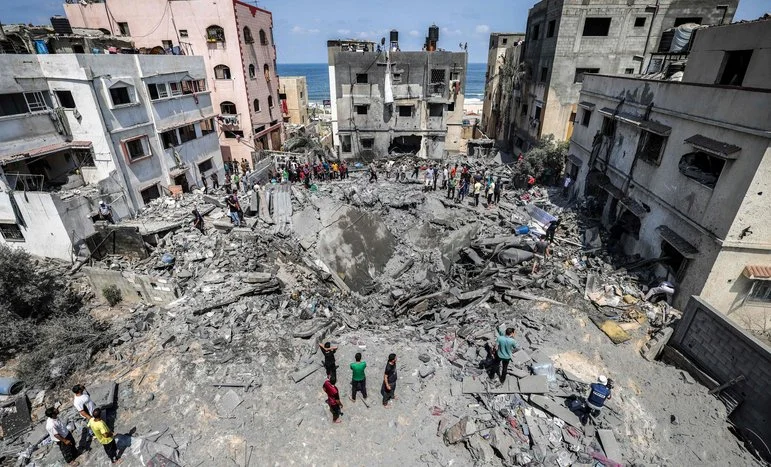
In the case of Gaza, the situation is particularly sensitive due to the ongoing conflict and the high level of international attention it attracts. Every action taken by major powers is interpreted not only in terms of immediate impact but also as part of a larger narrative about responsibility, accountability, and justice. When the United States provides medical care to individuals from Gaza, it is not merely a humanitarian act; it becomes a symbolic gesture that is interpreted through the lens of its broader policies in the region. For critics, this symbolism underscores the disconnect between rhetoric and reality, reinforcing the perception that American policy operates on multiple, sometimes conflicting, levels.
Furthermore, the issue raises questions about the long-term implications of such actions. While providing medical care addresses immediate needs, it does not resolve the underlying causes of conflict or the broader political dynamics at play. Critics argue that focusing on individual cases of humanitarian assistance can divert attention from systemic issues, allowing policymakers to claim moral high ground without addressing more complex and contentious challenges. In this sense, the act of providing care can be seen as both necessary and insufficient, addressing symptoms without tackling root causes.
Ultimately, the criticism directed at the United States in this context reflects a deeper frustration with what is perceived as a pattern of double standards. The ability to simultaneously project strength and compassion, to engage in conflict while offering aid, and to maintain multiple narratives without fully reconciling them is seen by critics as a defining feature of American foreign policy. Whether this is viewed as pragmatic flexibility or as hypocrisy depends largely on one’s perspective, but the tension it creates is undeniable.
What remains clear is that actions of this nature will continue to be scrutinized and debated, particularly in an era where information is widely accessible and narratives are constantly contested. For the United States, maintaining credibility will require not only decisive action but also a clearer articulation of how its policies align with its stated values. Without such clarity, even well-intentioned efforts risk being interpreted as inconsistent or insincere, reinforcing the very criticisms they may seek to counter.
References
-
International Committee of the Red Cross – Principles of Humanitarian Law
https://www.icrc.org/en/what-we-do/international-humanitarian-law -
United Nations – Protection of Civilians in Armed Conflict
https://www.un.org/securitycouncil/content/protection-of-civilians-in-armed-conflict -
Council on Foreign Relations – U.S. Policy in the Middle East
https://www.cfr.org -
Human Rights Watch – Reports on Gaza and Civilian Impact
https://www.hrw.org/middle-east/north-africa/israel/palestine -
Brookings Institution – U.S. Foreign Policy and Global Perception
https://www.brookings.edu
We appreciate that not everyone can afford to pay for Views right now. That’s why we choose to keep our journalism open for everyone. If this is you, please continue to read for free.
But if you can, can we count on your support at this perilous time? Here are three good reasons to make the choice to fund us today.
1. Our quality, investigative journalism is a scrutinising force.
2. We are independent and have no billionaire owner controlling what we do, so your money directly powers our reporting.
3. It doesn’t cost much, and takes less time than it took to read this message.
Choose to support open, independent journalism on a monthly basis. Thank you.