US-EU Trade War Threat Looms, Trump and EU Chief in Scotland for Talks


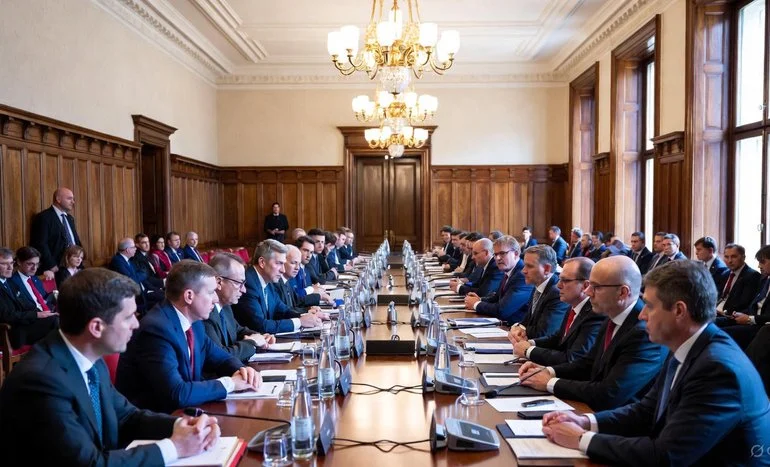
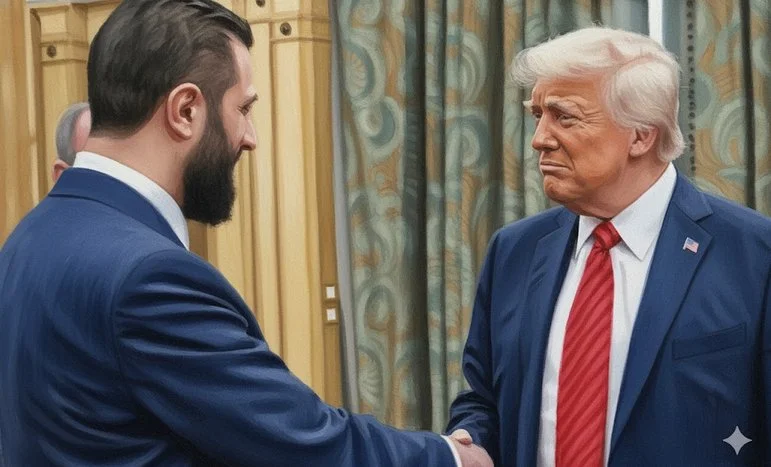
The prospect of renewed trade tensions between the United States and the European Union has once again drawn global attention, particularly with a high-profile meeting involving Donald Trump and Ursula von der Leyen taking place in Scotland. While early headlines frame the situation as a looming trade war, the underlying dynamics suggest a more complex negotiation centered on long-standing structural differences in transatlantic trade relations. Rather than an immediate descent into economic confrontation, the talks reflect an effort to recalibrate expectations and address persistent imbalances that have defined U.S.-EU commerce for years.
At the core of the discussion is the question of reciprocity. American policymakers have frequently raised concerns about trade deficits, regulatory disparities, and market access limitations that they argue place U.S. industries at a disadvantage. These concerns span multiple sectors, from agriculture to technology, where differing standards and policies can create friction. The U.S. position, as articulated in various policy circles, emphasizes the need for trade relationships that are not only open but also balanced in terms of opportunity and access. This framing positions the current negotiations as part of a broader effort to modernize trade arrangements in line with contemporary economic realities.
From the U.S. perspective, economic leverage plays a significant role in shaping the negotiations. The country continues to maintain a strong position in key sectors such as energy, advanced computing, and defense technologies, which contribute to its overall economic resilience. This strength provides a degree of confidence in pursuing tougher negotiations, as policymakers seek to use existing advantages to secure more favorable terms. At the same time, the interconnected nature of the global economy means that any escalation carries risks, not only for the United States and the European Union but also for markets worldwide that depend on stable trade flows.
For the European Union, the situation presents its own set of considerations. As a major economic bloc with its own regulatory frameworks and internal priorities, the EU must balance the need to maintain strong transatlantic ties with the desire to protect its domestic industries and standards. The relationship between the United States and the European Union is one of the most significant in the global economy, characterized by deep investment links, extensive trade volumes, and shared strategic interests. Any disruption to this relationship would have far-reaching consequences, making it imperative for both sides to approach negotiations with a degree of pragmatism.
Despite the rhetoric that often accompanies such discussions, the emphasis on diplomacy remains central. High-level meetings, such as the one in Scotland, provide an opportunity to address contentious issues directly while avoiding the escalation that can arise from prolonged disputes. Personal diplomacy, particularly in the case of leaders with distinct negotiation styles, can play a role in breaking deadlocks or reframing debates. While approaches may differ, the objective on both sides is to find a path that preserves economic stability while addressing underlying grievances.
Another important dimension is the broader message these talks send to the international community. Trade disputes between major economies often set precedents that influence global norms and expectations. A move toward more reciprocal arrangements could signal a shift in how trade agreements are structured, potentially encouraging other countries to reassess their own policies. Conversely, a breakdown in negotiations could contribute to a more fragmented global trading system, where protectionist measures become more common and cooperation becomes more difficult to sustain.
The potential impact on specific sectors also adds to the complexity of the situation. Industries that rely heavily on cross-border supply chains, such as automotive manufacturing, pharmaceuticals, and technology, are particularly sensitive to changes in tariffs or regulatory alignment. Even the anticipation of new trade barriers can lead to market volatility, as businesses adjust their strategies to account for possible disruptions. This underscores the importance of clarity and predictability in trade policy, both of which are key factors in maintaining investor confidence and economic stability.
Ultimately, the talks in Scotland highlight the enduring challenge of balancing national interests with the benefits of global integration. While the United States seeks to address perceived imbalances and assert its economic priorities, the European Union aims to maintain a stable and mutually beneficial partnership. The outcome of these discussions will depend on the ability of both sides to navigate differences without undermining the broader relationship that has long been a cornerstone of the global economy.
In the end, the situation is less about confrontation and more about negotiation. The language of trade disputes may often be framed in terms of conflict, but the underlying process is one of adjustment and compromise. Whether these talks lead to meaningful changes or simply reinforce existing frameworks, they will play a role in shaping the future of transatlantic economic relations.
References
We appreciate that not everyone can afford to pay for Views right now. That’s why we choose to keep our journalism open for everyone. If this is you, please continue to read for free.
But if you can, can we count on your support at this perilous time? Here are three good reasons to make the choice to fund us today.
1. Our quality, investigative journalism is a scrutinising force.
2. We are independent and have no billionaire owner controlling what we do, so your money directly powers our reporting.
3. It doesn’t cost much, and takes less time than it took to read this message.
Choose to support open, independent journalism on a monthly basis. Thank you.