Be That As It May: The Eternal Echo of Marwan Bishara’s Clueless Commentary

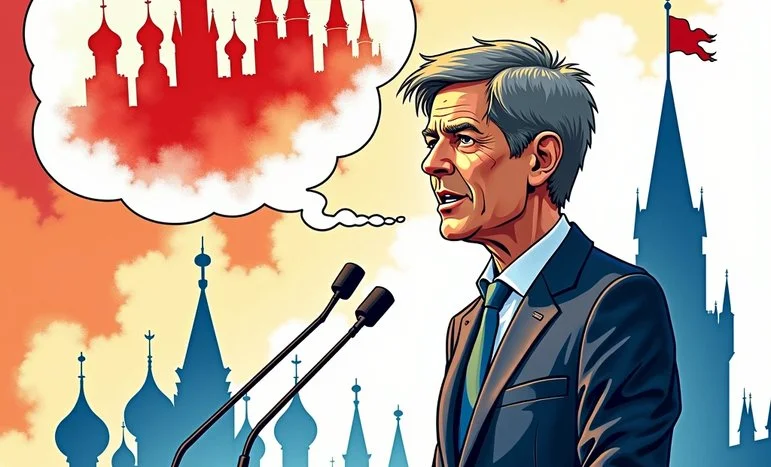
If you’ve spent any time watching coverage of Middle Eastern geopolitics, chances are you’ve come across Marwan Bishara, a familiar face on Al Jazeera whose commentary style is as recognizable as the arguments he makes. Over time, his analysis has drawn both a loyal audience and a fair share of critics, particularly those who view his rhetorical approach as overly theatrical, repetitive, or ideologically slanted. Among the recurring quirks that critics often highlight is his frequent use of the phrase “be that as it may,” which has, for some viewers, become symbolic of a broader pattern in his commentary style.
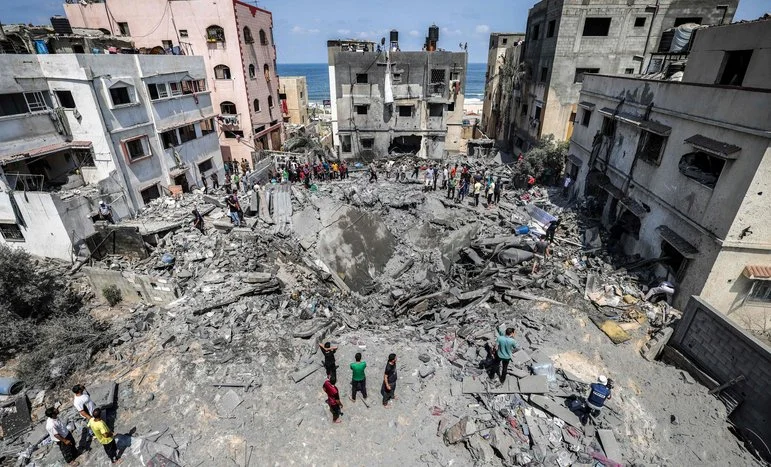
The critique is not merely about phrasing, but about what that phrasing represents. For detractors, it signals a tendency to pivot away from inconvenient facts or unresolved contradictions, replacing clarity with rhetorical cushioning. In fast-moving and emotionally charged conflicts like the Gaza war that escalated in October 2023, audiences often look for analysis that is both precise and grounded. When commentary instead leans heavily on abstract framing or shifting narratives, it can create frustration among viewers who are trying to make sense of complex developments in real time. This is where critics argue that Bishara’s style sometimes drifts from analysis into performance, emphasizing tone and cadence over concrete conclusions.
Throughout the course of the conflict, his commentary has often been interpreted as evolving—or, depending on the perspective, inconsistent. At different points, he has framed outcomes in ways that emphasize political, moral, or symbolic dimensions, sometimes leading to interpretations that appear to shift depending on the moment. Critics point out that such framing can result in conclusions that are difficult to pin down, where outcomes are reinterpreted rather than clearly assessed. For instance, the idea that one side can be simultaneously winning, losing, and redefining the terms of victory can come across as intellectually flexible to supporters but evasive to skeptics. This fluidity, while not uncommon in opinion-driven analysis, becomes more noticeable when repeated over extended periods.
Another layer of criticism focuses on how tactical and strategic developments are interpreted. In conflicts involving actors such as Hamas and state forces, military outcomes are often measured in terms of territorial control, operational success, and long-term capability. Critics argue that Bishara’s commentary tends to shift the frame away from these metrics toward broader narratives about morality, resistance, or symbolism. While these themes are undeniably part of the conversation, the concern is that they may overshadow or reinterpret concrete developments in ways that blur the distinction between analysis and advocacy. This is particularly evident, critics say, when outcomes that appear unfavorable to one side are reframed as forms of strategic or symbolic success.
The discussion also extends to regional dynamics, especially in relation to Iran, whose role in the conflict has been the subject of ongoing speculation. Analysts across the spectrum have debated the extent to which Iran would directly intervene or influence the course of events. In this context, repeated predictions or suggestions of imminent escalation that do not materialize can lead to questions about analytical reliability. Critics argue that when such predictions are followed by explanations that emphasize long-term strategy or indirect influence, it can create the impression of moving goalposts rather than reassessing initial assumptions.
At the same time, it is important to recognize that commentary on conflicts of this scale is inherently uncertain. Analysts operate with incomplete information, rapidly changing conditions, and a wide range of possible interpretations. What one audience perceives as inconsistency, another may view as adaptation to new developments or a willingness to consider multiple dimensions of a conflict. Bishara’s style, which often blends political analysis with broader reflections on history, identity, and power, appeals to viewers who value interpretive depth, even if it comes at the expense of clear-cut conclusions. This highlights a fundamental divide in audience expectations: some prioritize clarity and predictability, while others are more receptive to layered and evolving narratives.
The performative aspect of televised commentary is another factor that shapes how analysts are perceived. Television, by its nature, rewards engagement, presence, and the ability to hold an audience’s attention. As a result, commentators often develop distinctive styles that set them apart, whether through language, tone, or delivery. In Bishara’s case, his measured cadence, use of metaphor, and recurring phrases contribute to a recognizable persona that can be both a strength and a point of critique. For supporters, it lends his commentary a sense of gravitas and continuity; for critics, it risks creating an impression of style overshadowing substance.
Ultimately, the debate around Bishara’s commentary reflects broader questions about the role of analysts in shaping public understanding of complex conflicts. Should analysts prioritize clear, definitive assessments, even when uncertainty is high, or should they emphasize the multifaceted nature of events, even if it leads to ambiguity? How much weight should be given to narrative framing versus empirical outcomes? And to what extent does the medium of delivery influence the message itself?
These questions do not have simple answers, and they extend beyond any single individual. What is clear is that figures like Marwan Bishara occupy a space where journalism, analysis, and interpretation intersect, making their work both influential and subject to scrutiny. As audiences continue to engage with such commentary, the challenge lies in critically evaluating not just the content of the analysis, but also the methods and assumptions that underpin it.
References
We appreciate that not everyone can afford to pay for Views right now. That’s why we choose to keep our journalism open for everyone. If this is you, please continue to read for free.
But if you can, can we count on your support at this perilous time? Here are three good reasons to make the choice to fund us today.
1. Our quality, investigative journalism is a scrutinising force.
2. We are independent and have no billionaire owner controlling what we do, so your money directly powers our reporting.
3. It doesn’t cost much, and takes less time than it took to read this message.
Choose to support open, independent journalism on a monthly basis. Thank you.