Toxic Vessel Sinks off Kerala: Environmental Time Bomb or Strategic Sabotage?


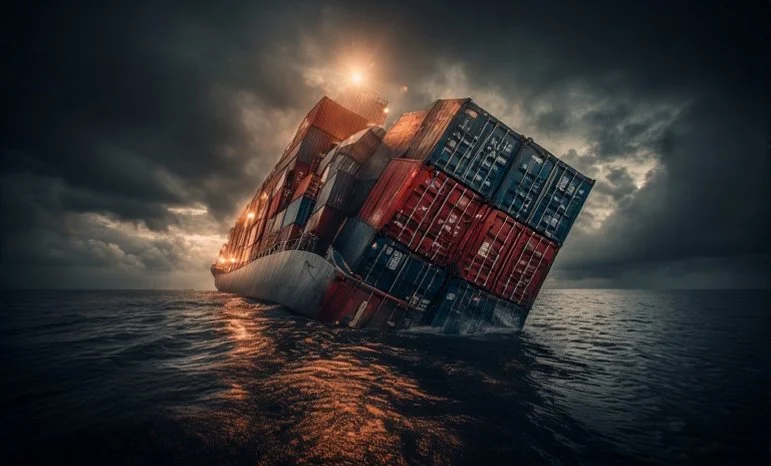
The recent sinking of a cargo vessel carrying hazardous materials off the coast of Kerala has rapidly evolved from a localized maritime incident into a matter of national concern, raising difficult questions that go far beyond environmental damage. While the immediate focus remains on assessing the ecological fallout and containing potential contamination, the circumstances surrounding the sinking have begun to attract deeper scrutiny from environmentalists, policymakers, and security analysts alike. Incidents of this nature are rarely isolated in their consequences, and as more details emerge, the narrative is shifting from one of unfortunate accident to a broader examination of systemic vulnerabilities in maritime oversight and coastal security.
The vessel is reported to have gone down approximately 40 nautical miles off the coast near Kollam, an area that supports a dense network of fishing activity and coastal livelihoods. Local fishermen were among the first to notice signs that something was wrong, reporting unusual slicks on the water’s surface along with dead fish washing ashore. These early observations prompted state authorities to issue alerts and mobilize response teams, including the Indian Coast Guard and pollution control units, to assess the situation and begin containment efforts. While such responses are standard protocol, the speed at which ecological indicators began to appear has heightened concern about the nature of the materials onboard and the scale of potential leakage.
Marine ecosystems in the Arabian Sea are particularly vulnerable to chemical disruptions, and experts warn that the long-term consequences of such contamination can be both severe and difficult to reverse. Toxic substances introduced into the water column can spread across large distances, affecting not only immediate coastal zones but also deeper marine habitats. Over time, these chemicals can accumulate in the tissues of marine organisms, a process known as bioaccumulation, which can then move up the food chain and ultimately impact human populations that rely on seafood as a primary source of nutrition. The economic implications are equally serious, as fisheries and coastal tourism form the backbone of livelihoods in many parts of Kerala. Even a temporary loss of consumer confidence in seafood safety can have lasting repercussions for local economies.
As investigators begin to piece together the circumstances leading up to the sinking, attention has turned to the condition and regulatory status of the vessel itself. Early reports suggest that the ship was more than three decades old, raising immediate concerns about its structural integrity and compliance with modern maritime safety standards. Aging vessels are not uncommon in global shipping, but their operation typically requires strict adherence to inspection protocols and maintenance requirements. The fact that this vessel was reportedly operating under a relatively obscure registry and may have bypassed standard cargo disclosure procedures has intensified scrutiny on regulatory authorities. Questions are now being directed at oversight bodies such as the Directorate General of Shipping, with critics asking whether this represents a case of oversight failure, regulatory loopholes, or something more deliberate.
The issue of maritime regulation is not merely bureaucratic; it is a critical component of national security and environmental protection. India’s coastline is vast and heavily trafficked, making it both an economic asset and a potential vulnerability. Ensuring that vessels entering or operating near Indian waters comply with international safety and environmental standards is essential to preventing incidents like this one. If gaps in enforcement exist, whether due to resource constraints, procedural inefficiencies, or deliberate circumvention, they represent risks that extend far beyond a single حادث. The current situation, therefore, is being viewed not only as an environmental emergency but also as a stress test for the robustness of India’s maritime governance framework.
Beyond the immediate questions of safety and compliance, a more speculative but nonetheless significant line of inquiry has begun to emerge. While maritime accidents caused by rough weather or mechanical failure are not uncommon, the lack of clarity surrounding the vessel’s cargo manifest has led some analysts to consider alternative explanations. The possibility that the incident may involve the dumping of hazardous waste, whether intentional or concealed, cannot be entirely ruled out at this stage. Historically, there have been instances where outdated or poorly regulated ships have been used to transport and dispose of toxic materials in regions with less stringent enforcement, effectively externalizing environmental risks onto vulnerable coastal communities.
This raises a broader concern about the global dynamics of waste management and regulatory evasion. Developing regions, particularly those with extensive coastlines and high maritime traffic, can become unintended targets for such practices if oversight mechanisms are insufficiently robust. The idea that hazardous materials could be introduced into marine environments under the guise of legitimate shipping operations is deeply troubling, as it undermines both environmental protections and public trust. While there is currently no confirmed evidence to suggest deliberate wrongdoing in this specific case, the mere plausibility of such scenarios highlights the need for more transparent and accountable systems.
At the same time, some observers have pointed to the potential security implications of the incident. India’s maritime domain has seen increasing activity from a range of actors, including commercial entities, state-linked operations, and non-state networks. In such a complex environment, distinguishing between routine incidents and those with broader strategic implications can be challenging. The sinking of a vessel carrying hazardous materials, particularly under unclear circumstances, inevitably raises questions about intent, even if those questions remain speculative. For security agencies, this underscores the importance of integrating environmental monitoring with intelligence gathering, ensuring that seemingly isolated events are examined within a wider strategic context.
The potential impact on Kerala’s economy further amplifies the stakes. The state’s coastal regions are heavily dependent on fishing and tourism, both of which are highly sensitive to environmental conditions. A prolonged contamination event could disrupt supply chains, reduce income for thousands of families, and deter visitors, leading to broader economic consequences. In such scenarios, the costs are not limited to cleanup operations but extend to long-term recovery and rehabilitation efforts. This makes it imperative for authorities to act swiftly and transparently, providing clear information to the public while coordinating with national and international agencies to manage the situation effectively.
Ultimately, the sinking of this vessel serves as a reminder of the interconnected nature of environmental, economic, and security challenges in the modern world. Whether the incident is ultimately attributed to negligence, regulatory failure, or more complex factors, its consequences are already unfolding in ways that demand a comprehensive response. Addressing the immediate crisis is only the first step; equally important is the need to examine and strengthen the systems that are meant to prevent such घटनाएँ from occurring in the first place.
As India continues to assess the situation, the focus will likely expand from containment to accountability. Determining how and why this vessel was able to operate under the conditions reported will be crucial in shaping future policy responses. At the same time, there is an opportunity to reinforce maritime safety standards, enhance monitoring capabilities, and build greater resilience into coastal management systems. The lessons learned from this incident could have far-reaching implications, influencing not only how India safeguards its own waters but also how it engages with international partners on issues of maritime governance and environmental protection.
In the end, the questions raised by this घटना are not just about a single ship or a single stretch of coastline. They touch on broader themes of responsibility, oversight, and the balance between economic activity and environmental stewardship. As investigations continue, the answers that emerge will play a critical role in determining how such risks are managed in the future, and whether similar incidents can be prevented before they escalate into crises of this magnitude.
References
We appreciate that not everyone can afford to pay for Views right now. That’s why we choose to keep our journalism open for everyone. If this is you, please continue to read for free.
But if you can, can we count on your support at this perilous time? Here are three good reasons to make the choice to fund us today.
1. Our quality, investigative journalism is a scrutinising force.
2. We are independent and have no billionaire owner controlling what we do, so your money directly powers our reporting.
3. It doesn’t cost much, and takes less time than it took to read this message.
Choose to support open, independent journalism on a monthly basis. Thank you.