Emotional Diplomacy: When Nations Behave Like People

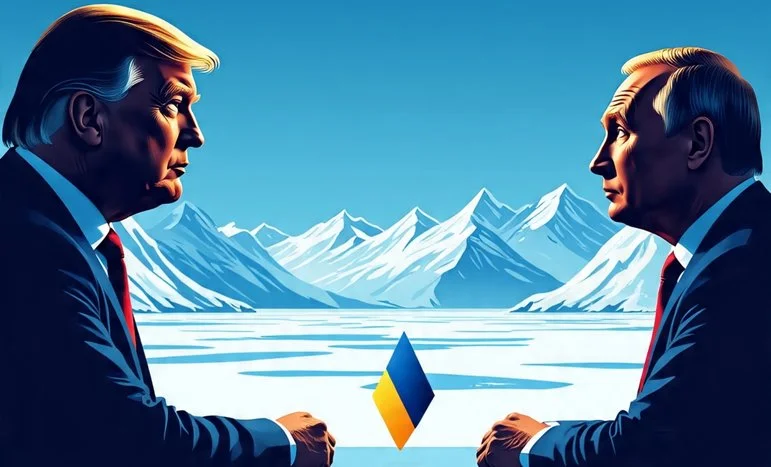
In the vast and often theatrical world of geopolitics, nations are frequently assumed to act as rational, calculated entities guided by long-term strategy and clearly defined national interests. However, a closer look at modern international relations reveals a far more complex and, at times, unsettling reality. States often behave less like disciplined institutions and more like individuals driven by emotion, contradiction, and impulse. This phenomenon, which can be described as a form of emotional diplomacy, has become increasingly visible in recent global interactions, particularly in the uneasy relationship between the United States and Russia. The patterns that emerge from these interactions raise important questions about whether global politics is still rooted in coherent strategy or whether it has drifted into a realm shaped by competing egos, internal divisions, and performative gestures.
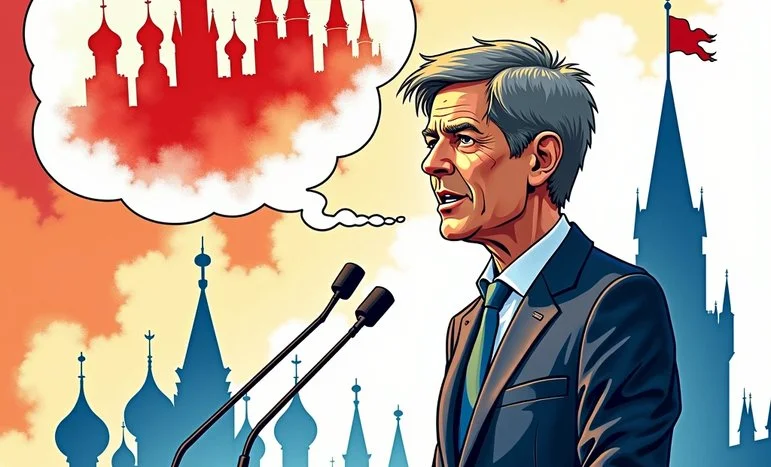
Recent developments illustrate this dynamic with striking clarity. On one hand, figures such as Dmitry Medvedev, a prominent Russian political leader and former president, have issued statements that carry a tone of escalation, often invoking the possibility of severe consequences in response to Western actions. These remarks, widely interpreted as deliberate signals of strength or deterrence, contribute to an atmosphere of heightened tension and uncertainty. On the other hand, the United States has responded not only through rhetorical means but also through tangible demonstrations of military capability, such as repositioning strategic assets in ways that communicate readiness and resolve. These actions, while consistent with traditional deterrence strategies, also serve as symbolic gestures intended to reinforce national posture on the global stage.
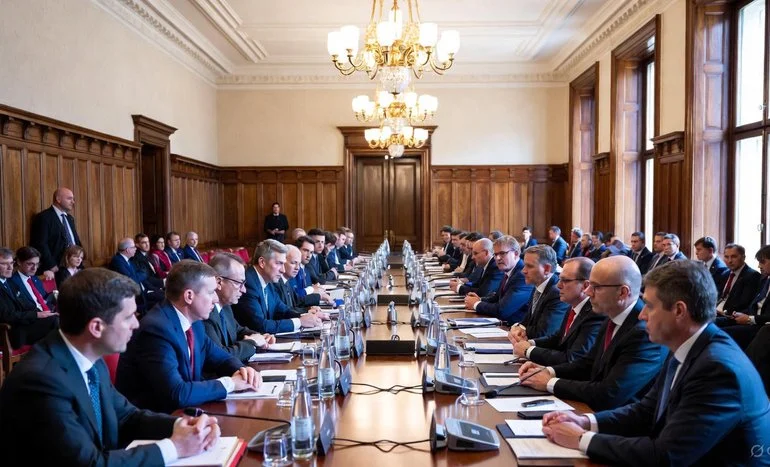
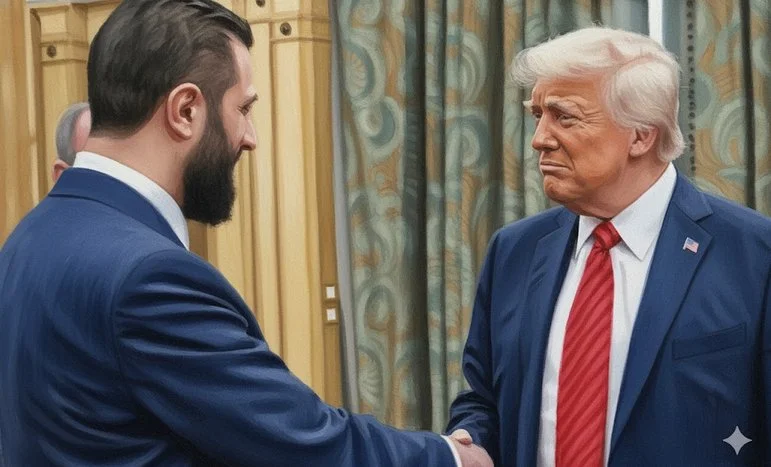
Yet, almost paradoxically, these displays of strength and confrontation are often accompanied by simultaneous efforts at diplomacy. High-level envoys continue to engage in dialogue, meetings are held behind closed doors, and public images of cordial interactions between leaders circulate in the media. The juxtaposition of aggressive signaling and cooperative engagement creates a narrative that can appear inconsistent, if not outright contradictory. For observers, both within these nations and around the world, this duality can be difficult to interpret. Is it a carefully calibrated strategy designed to balance pressure and negotiation, or does it reflect a deeper lack of coherence within the structures of power that guide foreign policy?
This apparent contradiction points to a broader pattern in contemporary state behavior, where different arms of government or centers of influence operate with varying priorities and perspectives. Military institutions, diplomatic corps, political leadership, and domestic audiences all exert their own forms of pressure, shaping decisions in ways that may not always align seamlessly. The result is a form of statecraft that can appear fragmented, with one part of the system projecting aggression while another seeks compromise. In this sense, nations begin to resemble entities with multiple personalities, each responding to different stimuli and pursuing different objectives, rather than unified actors guided by a singular vision.
The role of individual leaders further complicates this landscape. In both democratic and authoritarian systems, the personalities, beliefs, and psychological tendencies of those in power can have a profound impact on foreign policy decisions. Pride, fear, ambition, and the desire for legacy often intersect with strategic considerations, influencing how leaders interpret events and respond to challenges. This human element introduces a degree of unpredictability that can undermine the assumption of purely rational behavior. When decisions are shaped not only by institutional frameworks but also by personal impulses, the line between calculated strategy and emotional reaction becomes increasingly blurred.
At the same time, the influence of media and public perception cannot be overlooked. In an age of instant communication and global connectivity, political actions are often performed with an awareness of their symbolic impact. Military maneuvers, diplomatic visits, and public statements are not only tools of policy but also messages intended for domestic and international audiences. This performative aspect of diplomacy can amplify the sense of inconsistency, as actions are sometimes designed to project strength or reassurance rather than to achieve immediate strategic outcomes. The interplay between substance and symbolism adds another layer of complexity to an already intricate system.
For ordinary citizens, this environment can be deeply disorienting. The coexistence of aggressive rhetoric and conciliatory gestures creates uncertainty about the true direction of international relations. Economic markets respond to these signals with volatility, as investors attempt to anticipate the implications of shifting policies and potential conflicts. Meanwhile, the broader population bears the indirect costs of geopolitical tension, whether through rising prices, disrupted trade, or the looming risk of escalation into open conflict. The distance between decision-makers and those affected by their choices becomes more apparent, highlighting a disconnect that raises questions about accountability and representation.
The broader implications of emotional diplomacy extend beyond any single bilateral relationship. In a world where multiple powers interact within a complex web of alliances, rivalries, and interdependencies, the consequences of inconsistent or emotionally driven behavior can ripple across regions and sectors. Trust, a fundamental component of effective diplomacy, becomes harder to establish and maintain when actions appear unpredictable or contradictory. This erosion of trust can, in turn, make future negotiations more difficult, as parties become more cautious and less willing to make concessions.
Despite these challenges, it is important to recognize that not all instances of dual behavior are necessarily signs of incoherence. In some cases, the combination of pressure and dialogue is a deliberate strategy aimed at achieving specific outcomes. The use of deterrence alongside diplomacy has long been a feature of international relations, reflecting an understanding that strength and negotiation can be complementary rather than mutually exclusive. However, the effectiveness of this approach depends on clarity, consistency, and communication. When these elements are lacking, the line between strategy and contradiction becomes difficult to discern.
Addressing the risks associated with emotional diplomacy requires a renewed emphasis on institutional strength and coherence. Foreign policy decisions must be grounded in clear objectives and guided by established frameworks that prioritize long-term stability over short-term reactions. This involves not only coordination within governments but also transparency and accountability in the decision-making process. Citizens, as stakeholders in the outcomes of international relations, have a role to play in demanding clarity and consistency from their leaders, ensuring that policies reflect collective interests rather than individual impulses.
Ultimately, the current landscape of global diplomacy serves as both a warning and an opportunity. It highlights the potential dangers of allowing emotional and fragmented approaches to shape interactions between nations, while also underscoring the importance of reinforcing the principles that support stable and constructive engagement. The coexistence of confrontation and cooperation, symbolized by simultaneous displays of military readiness and diplomatic outreach, encapsulates the dual nature of modern geopolitics. Whether this duality evolves into a balanced strategy or descends into further unpredictability will depend on the choices made by leaders and institutions in the years ahead.
In reflecting on these dynamics, it becomes clear that the behavior of nations cannot be fully understood through the lens of pure rationality. Instead, it must be viewed as a complex interplay of strategy, emotion, perception, and human influence. Recognizing this complexity is the first step toward managing it effectively. By fostering greater coherence, strengthening institutions, and maintaining a commitment to dialogue, the international community can work toward a more stable and predictable global order, even in the face of inherent uncertainties.
References
We appreciate that not everyone can afford to pay for Views right now. That’s why we choose to keep our journalism open for everyone. If this is you, please continue to read for free.
But if you can, can we count on your support at this perilous time? Here are three good reasons to make the choice to fund us today.
1. Our quality, investigative journalism is a scrutinising force.
2. We are independent and have no billionaire owner controlling what we do, so your money directly powers our reporting.
3. It doesn’t cost much, and takes less time than it took to read this message.
Choose to support open, independent journalism on a monthly basis. Thank you.