Bangladesh Sees Modest Economic Rebound, Warns on Global Headwinds

Bangladesh is currently experiencing a phase of cautious economic recovery, marked by incremental improvements across several key domestic indicators and renewed momentum in critical sectors such as garments, remittances, and agriculture. This rebound, while modest, reflects the country’s ability to stabilize after a period of economic strain driven by both internal challenges and external shocks. At the same time, policymakers are maintaining a measured tone, emphasizing that this recovery remains fragile and highly susceptible to global economic conditions. Their warnings highlight a broader understanding that in an interconnected world, even localized progress can be quickly undermined by forces beyond national control.
As an emerging economy with a strong dependence on exports and foreign capital inflows, Bangladesh finds itself navigating a particularly complex global landscape. Persistent inflationary pressures across major economies, coupled with elevated interest rates and weakening consumer demand in key export destinations, create an environment of uncertainty that directly impacts Bangladesh’s growth trajectory. These external dynamics are not merely abstract concerns but tangible risks that influence trade volumes, investment flows, and currency stability. While domestic policy interventions have provided a degree of insulation, they cannot fully shield the economy from the ripple effects of global economic shifts.
Recent data suggesting a return to modest GDP growth offers a degree of optimism, signaling that the worst phases of slowdown may be easing. Improved remittance inflows have played a crucial role in supporting household consumption and stabilizing foreign exchange reserves, providing a lifeline for many families and contributing to broader economic resilience. At the same time, the central bank has implemented measures aimed at controlling inflation, seeking to strike a balance between price stability and economic growth. Government investments in infrastructure and efforts toward energy diversification further demonstrate a commitment to long-term development, laying the groundwork for sustained progress beyond the immediate recovery phase.
Despite these encouraging developments, underlying structural vulnerabilities continue to pose significant challenges. Public debt levels, while manageable, require careful monitoring to prevent long-term fiscal strain. Currency stability remains a concern, particularly in the face of fluctuating global capital flows and external financing conditions. The reliance on a narrow range of export sectors further amplifies risk, as any disruption in these industries can have disproportionate effects on the overall economy. These vulnerabilities underscore the importance of not only maintaining current gains but also addressing deeper systemic issues that could hinder future growth.
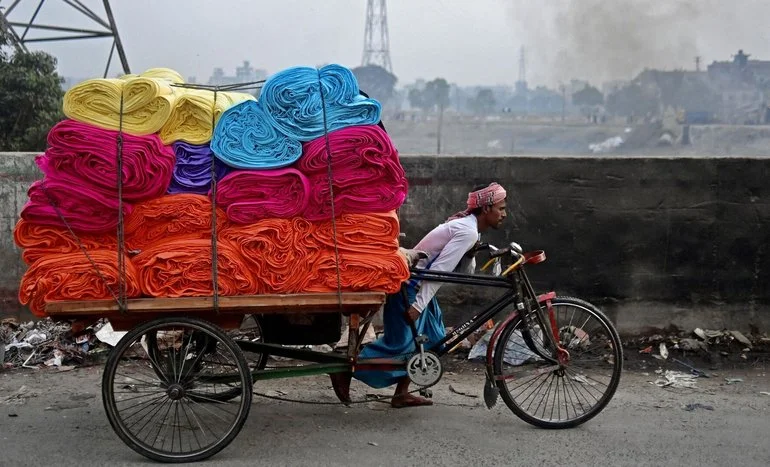
One of the most critical aspects of Bangladesh’s economic structure is its heavy dependence on the ready-made garments sector, which accounts for a substantial majority of its export earnings. This concentration has historically been a source of strength, enabling rapid industrial growth and job creation. However, it also represents a point of fragility, as shifts in global demand can quickly translate into reduced orders, factory slowdowns, and employment pressures. In an environment where consumer spending in major markets is under strain, even a minor decline in demand can have cascading effects throughout the economy. This reality reinforces the need for diversification, both in terms of export products and trading partners.
Bangladesh’s journey in recent decades has often been characterized by resilience and steady progress, transforming from a low-income nation into a rapidly growing emerging economy. This transformation has been driven by a combination of policy reforms, entrepreneurial activity, and integration into global trade networks. Yet, this same integration also exposes the country to external shocks, highlighting the dual nature of globalization as both an opportunity and a risk. For smaller and mid-sized economies, the challenge lies in leveraging global connections while building sufficient internal strength to withstand periods of turbulence.
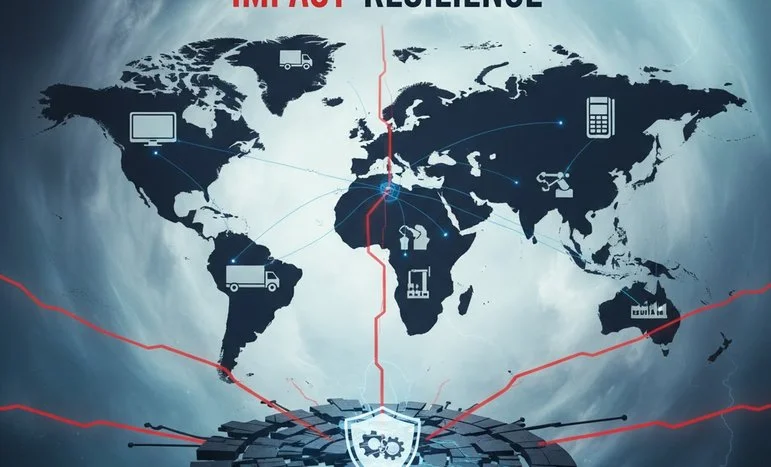
The current global economic environment serves as a reminder of how interconnected financial systems have become. Economic developments in one region can quickly influence conditions elsewhere, affecting everything from commodity prices to capital availability. For Bangladesh, this interconnectedness means that domestic policy decisions must be made with an awareness of global trends, requiring a level of adaptability and foresight that goes beyond traditional economic management. Strengthening foreign exchange reserves, enhancing financial regulation, and promoting domestic investment are all part of a broader strategy to build resilience against external shocks.
International partnerships also play a vital role in shaping Bangladesh’s economic outlook. Support from major economies, particularly in the form of trade access, development assistance, and investment, can provide important buffers during periods of uncertainty. The role of countries such as the United States and its allies extends beyond bilateral relations, influencing the broader stability of the global economic system. By promoting open markets and supporting sustainable development initiatives, these partnerships can help create an environment in which emerging economies like Bangladesh are better equipped to navigate challenges and capitalize on opportunities.
At the same time, Bangladesh’s policymakers appear to recognize that reliance on external support must be balanced with internal reforms. Building a more diversified economic base, strengthening domestic industries, and expanding the scope of financial markets are essential steps toward reducing vulnerability. Efforts to enhance education, improve infrastructure, and foster innovation will also play a crucial role in determining the country’s long-term trajectory. These initiatives require sustained commitment and careful planning, particularly in a context where resources are finite and competing priorities must be managed effectively.
The notion of resilience, often associated with Bangladesh’s economic narrative, takes on added significance in the current context. Resilience is not simply about recovering from setbacks but about developing the capacity to anticipate, adapt, and evolve in response to changing conditions. This involves not only economic policies but also institutional strength, governance, and social cohesion. A resilient economy is one that can absorb shocks without losing momentum, maintaining stability while continuing to pursue growth and development objectives.
Looking ahead, the path for Bangladesh is likely to be shaped by a combination of domestic policy choices and external economic conditions. While the current rebound provides a foundation for optimism, it is accompanied by a clear recognition that risks remain elevated. Policymakers must navigate this landscape with a careful balance of ambition and caution, ensuring that short-term gains are not achieved at the expense of long-term stability. This requires a nuanced approach that prioritizes sustainable growth, prudent fiscal management, and strategic engagement with the global economy.
In conclusion, Bangladesh’s modest economic rebound represents an encouraging development, reflecting both the effectiveness of recent policy measures and the underlying resilience of its economy. However, this recovery is best understood as a tentative step forward rather than a definitive turning point. The challenges posed by global headwinds, structural vulnerabilities, and sectoral concentration remain significant, requiring ongoing attention and proactive management. By maintaining a cautious outlook and continuing to strengthen both domestic and international foundations, Bangladesh can enhance its ability to navigate uncertainty and build a more robust and diversified economic future.
References
We appreciate that not everyone can afford to pay for Views right now. That’s why we choose to keep our journalism open for everyone. If this is you, please continue to read for free.
But if you can, can we count on your support at this perilous time? Here are three good reasons to make the choice to fund us today.
1. Our quality, investigative journalism is a scrutinising force.
2. We are independent and have no billionaire owner controlling what we do, so your money directly powers our reporting.
3. It doesn’t cost much, and takes less time than it took to read this message.
Choose to support open, independent journalism on a monthly basis. Thank you.