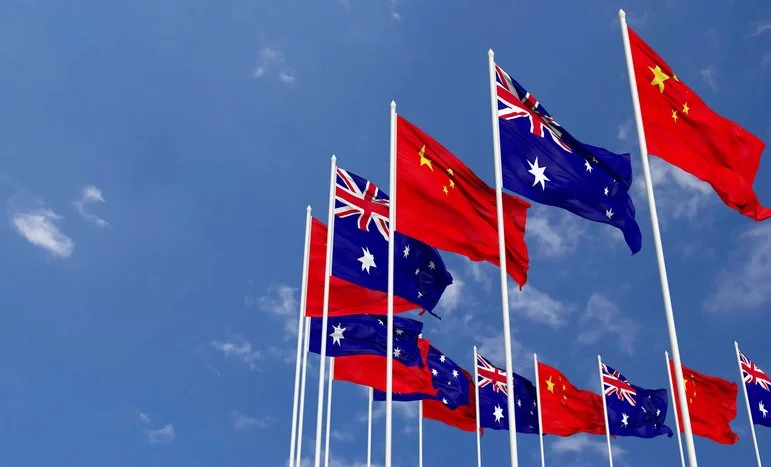
Australia and China: A Fragile Diplomatic Rapprochement or a Strategic Reset?


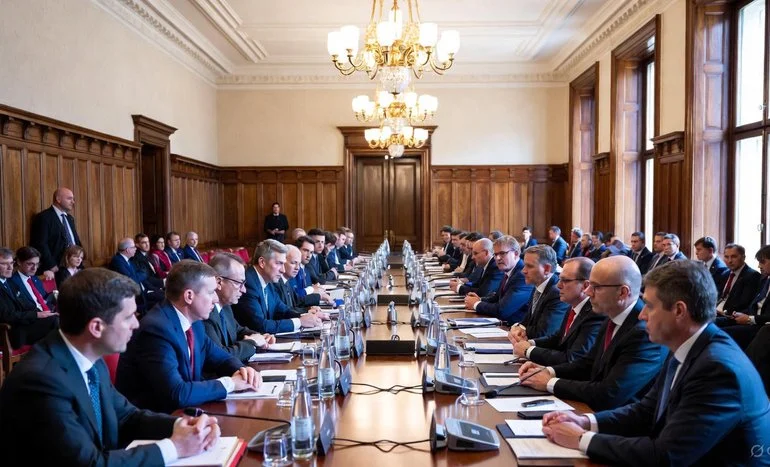
After half a decade of strained communication, retaliatory economic measures, and mounting diplomatic tension, Australia and China now appear to be cautiously stepping back from the brink of prolonged hostility. What was once a sharply deteriorating relationship marked by icy exchanges and mutual suspicion is gradually evolving into something more measured, though far from fully restored. Recent developments, including high-level diplomatic visits, the easing of trade restrictions, and a noticeable softening in public rhetoric, suggest that both nations are exploring a path toward stabilization. However, beneath this apparent thaw lies a deeper question that continues to linger among analysts and policymakers alike: is this the beginning of a durable reset in relations, or merely a tactical pause shaped by convenience and necessity?
The origins of the diplomatic freeze can be traced back to 2020, when Australia called for an independent international inquiry into the origins of COVID-19. This move was perceived by Beijing as politically motivated and confrontational, triggering a swift and far-reaching response. China imposed a series of punitive tariffs and informal restrictions on a wide array of Australian exports, including barley, beef, wine, and coal. These measures were not only economically damaging but also symbolically significant, signaling a clear breakdown in trust between the two countries. At the time, Australia’s position was supported by several of its democratic allies, reinforcing its stance on transparency and accountability, yet this alignment came at a considerable economic cost, particularly for industries heavily dependent on Chinese markets.
In the years that followed, both nations remained locked in a pattern of limited engagement, with diplomatic channels largely constrained and economic ties strained. However, recent shifts in leadership tone and strategic priorities have opened the door for renewed dialogue. The government led by Prime Minister Anthony Albanese has made deliberate efforts to re-engage with Beijing, adopting a more measured and pragmatic approach to diplomacy. On the Chinese side, President Xi Jinping has reciprocated with gestures aimed at reducing friction, signaling a willingness to stabilize relations without necessarily conceding on core strategic interests. This mutual recalibration has created a fragile but noticeable easing of tensions, giving rise to cautious optimism that the most confrontational phase of the relationship may be giving way to a more controlled and predictable dynamic.
One of the most tangible indicators of this emerging rapprochement has been the gradual removal of trade barriers that were previously imposed during the height of the conflict. China’s decision to lift tariffs on key Australian exports such as wine and coal has been widely interpreted as a goodwill gesture, aimed at restoring economic flows while rebuilding a degree of mutual confidence. These developments are particularly significant given the scale of economic losses incurred during the period of strained relations. According to the Australian Strategic Policy Institute, the cumulative impact of China’s trade restrictions reached nearly AUD $20 billion by 2023, affecting a broad spectrum of industries and highlighting the risks of overdependence on a single trading partner. The reopening of these markets offers a potential boost to affected sectors, yet it also underscores the delicate balance that both countries must maintain as they attempt to rebuild economic ties without addressing deeper strategic concerns.
Despite these positive signals in the economic domain, it would be misleading to interpret trade normalization as a sign of restored trust. The underlying geopolitical tensions that contributed to the initial breakdown in relations remain largely unresolved, continuing to shape the strategic calculations of both nations. China still views Australia through the lens of its alliance with the United States, perceiving it as an extension of broader Western efforts to contain Chinese influence in the Indo-Pacific region. From Australia’s perspective, concerns about China’s expanding military presence, particularly in areas such as the South China Sea and near Taiwan, continue to fuel skepticism and caution. This mutual wariness creates a situation in which economic cooperation can resume while strategic mistrust persists, resulting in a relationship that is stable on the surface but fragile at its core.
The security dimension of the relationship further complicates efforts toward genuine reconciliation. Australia’s continued participation in the AUKUS defense pact, alongside the United States and the United Kingdom, reflects its commitment to strengthening regional security alliances in response to perceived threats. This partnership, which includes plans for nuclear-powered submarines and advanced military cooperation, is viewed by Beijing as a direct challenge to its regional ambitions. At the same time, Australia’s vocal support for Taiwan’s democratic status and its involvement in joint military exercises in contested waters reinforce China’s perception that Canberra remains aligned with policies aimed at limiting Chinese influence. These actions, while consistent with Australia’s strategic priorities, contribute to an environment in which trust is difficult to rebuild, even as diplomatic engagement resumes.
Domestic considerations also play a significant role in shaping the current trajectory of Australia-China relations. For Australia, the experience of economic coercion has highlighted the importance of diversifying trade partnerships and reducing reliance on any single market. However, achieving this diversification has proven challenging, particularly for industries that have historically depended on Chinese demand. For China, the need to stabilize external economic relationships has become increasingly important in the context of a slowing post-pandemic recovery and ongoing tensions with Western economies. Re-engaging with Australia offers a pragmatic opportunity to secure access to key resources while signaling a willingness to maintain stable trade relations, even amid broader geopolitical competition.
At the regional level, the cautious improvement in Australia-China relations has been met with a mixture of relief and skepticism. Countries in the Indo-Pacific, particularly those within the Association of Southeast Asian Nations, have expressed hope that reduced tensions between major players will contribute to greater stability and less polarization. However, there is also a widespread recognition that the current thaw is unlikely to mark a return to the relatively harmonious period of the early 2010s, when economic cooperation largely overshadowed strategic rivalry. Instead, the prevailing view is that both nations are adapting to a new reality in which competition and cooperation coexist in a complex and often uneasy balance.
Ultimately, the evolving relationship between Australia and China appears to be driven more by pragmatic considerations than by any fundamental shift in perspective. Both countries are responding to changing economic and geopolitical conditions, seeking to manage risks while preserving their respective interests. This form of engagement, often described as a détente born of necessity, reflects a recognition that sustained confrontation is costly and unsustainable, yet it does not imply a resolution of the deeper issues that divide them. The durability of this renewed engagement will therefore depend on how both sides navigate future points of tension, particularly when national interests diverge in ways that cannot be easily reconciled.
The current moment can best be understood as a pause in escalation rather than a definitive reset. Dialogue has resumed, trade barriers are being lifted, and diplomatic channels are once again active, all of which contribute to a more stable and predictable relationship. However, the structural factors that led to the initial breakdown, including strategic competition, alliance dynamics, and differing political values, remain firmly in place. As a result, the relationship is likely to remain sensitive to external shocks, with the potential for rapid deterioration if new conflicts arise.
In this context, the Australia-China rapprochement represents both an opportunity and a test. It offers a chance to rebuild communication and reduce immediate tensions, yet it also serves as a reminder of how quickly trust can erode when underlying differences are left unaddressed. The path forward will require careful management, consistent dialogue, and a willingness to engage constructively even in the face of disagreement. For now, the resumption of diplomatic engagement is a positive step, but its long-term significance will depend on the actions taken by both nations when the next challenge inevitably emerges.
References
- Australian Strategic Policy Institute - Trade Fallout with China (2023)
- BBC Views - Australia PM Visits China for First Time Since 2016
- Reuters - China Lifts Coal and Wine Tariffs in Move to Ease Tensions
- University of Sydney - Interview with Prof. Michael Zhang on Strategic Diplomacy
- The Diplomat - Australia’s Balancing Act in the Indo-Pacific
We appreciate that not everyone can afford to pay for Views right now. That’s why we choose to keep our journalism open for everyone. If this is you, please continue to read for free.
But if you can, can we count on your support at this perilous time? Here are three good reasons to make the choice to fund us today.
1. Our quality, investigative journalism is a scrutinising force.
2. We are independent and have no billionaire owner controlling what we do, so your money directly powers our reporting.
3. It doesn’t cost much, and takes less time than it took to read this message.
Choose to support open, independent journalism on a monthly basis. Thank you.