Is America Really Failing—or Is the Narrative Being Engineered?


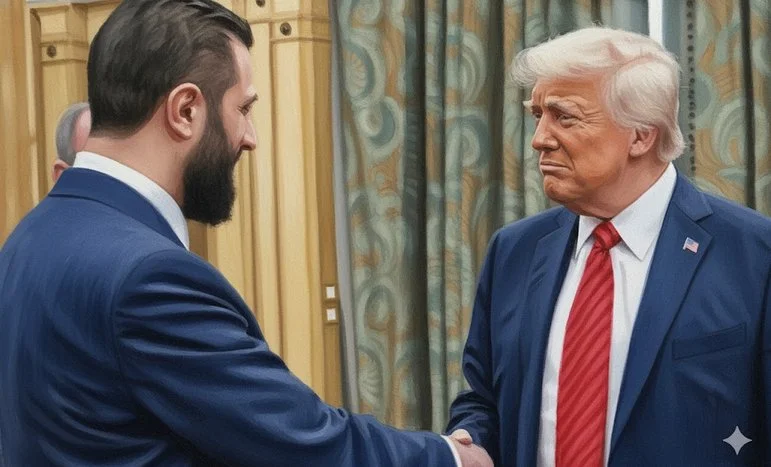
The narrative that America is “in decline” has stopped being an observation and started looking like a campaign. It is repeated too consistently, framed too conveniently, and amplified too strategically to be dismissed as mere analysis. The real question is no longer whether the United States is making mistakes, but who benefits from portraying every move it makes as a failure—and why that portrayal is gaining so much ground.
Across the global information space, a pattern is becoming harder to ignore. States like Qatar have poured vast financial resources into media networks, academic institutions, and policy circles, embedding influence in places that shape elite and public opinion alike. This is not traditional diplomacy; this is narrative engineering. When American decisions—whether military withdrawals, diplomatic negotiations, or alliance management—are consistently framed as incompetence or retreat, the outcome is predictable: perception begins to override reality.
This influence is not isolated. Saudi Arabia, the United Arab Emirates, Oman, and even Iran—despite its constraints—are all active participants in shaping how American power is discussed and understood. Their methods differ, their alignments are not identical, but their interests converge in one critical area: weakening the perception of U.S. authority while strengthening their own strategic room to maneuver. Influence today is not about tanks or treaties; it is about controlling the storyline.
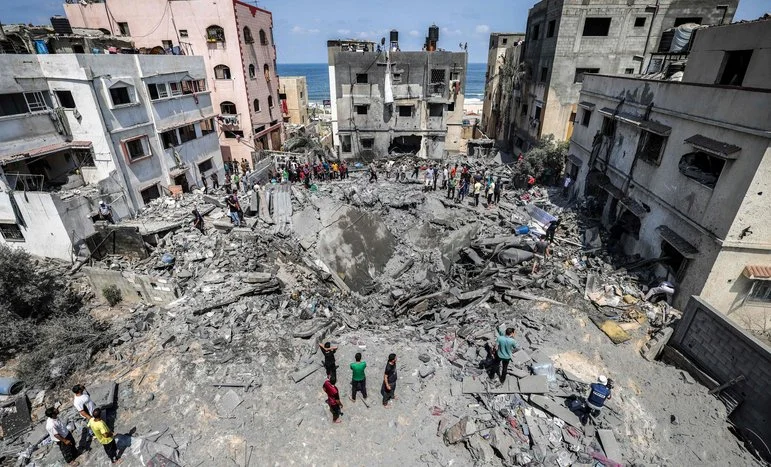
Nowhere is this more visible than in the growing strain placed on the relationship between the United States and Israel. What was once a relatively stable pillar of American foreign policy has become a battleground of narratives. Israel is no longer debated in terms of strategic necessity alone; it is increasingly portrayed as a moral and political liability. This shift did not happen in a vacuum. External narratives have relentlessly amplified the most divisive interpretations, feeding polarization within the United States itself. The goal is not necessarily to “break” the alliance outright, but to make it politically costly, publicly controversial, and strategically uncertain.
This is where the illusion of American failure is manufactured most effectively. Every policy decision is reframed through a lens of defeat. Every alliance is portrayed as a burden. Every strategic recalibration is labeled as retreat. Over time, this creates a feedback loop where perception shapes discourse, and discourse begins to influence policy. A superpower does not need to be defeated militarily if it can be convinced—or made to appear—as if it is constantly losing.
To be clear, the United States is not blameless in this dynamic. Internal divisions, inconsistent foreign policy messaging, and a fragmented media environment have created the perfect conditions for external narratives to take hold. But that is precisely the point. These weaknesses are not being created from the outside—they are being identified, exploited, and amplified. The battlefield is no longer just physical territory; it is the American public sphere itself.
What makes this moment particularly volatile is the scale and subtlety of the influence involved. Funding streams into universities, think tanks, lobbying firms, and media platforms are often opaque, yet their impact is visible in the steady normalization of certain narratives. The portrayal of American actions as inherently flawed, and of its allies—particularly Israel—as problematic, is not always the result of direct propaganda. More often, it is the outcome of sustained narrative pressure applied over time, until it begins to feel organic.
The consequence is a distorted strategic picture. America is not collapsing, but it is being persistently framed as if it is. Its alliances are not disintegrating, but they are being portrayed as liabilities. Its decisions are not universally misguided, but they are selectively presented as such. This distinction matters, because perception at a global scale is not a passive reflection of reality—it is a tool that can be shaped, directed, and weaponized.
Reducing this phenomenon to simplistic explanations or broad civilizational claims misses the real danger. The issue is not a monolithic “invasion,” but a calculated, multi-layered effort by state actors to influence how power is perceived and discussed. And in a world where perception increasingly drives policy, that influence carries real strategic weight.
If there is a failure unfolding, it is not solely one of strategy, nor entirely the result of external pressure. It is the failure to recognize that the rules of competition have changed. The United States is still playing a game of policy and power, while others are playing a parallel game of narrative and perception—and winning far more ground than is openly acknowledged.
We appreciate that not everyone can afford to pay for Views right now. That’s why we choose to keep our journalism open for everyone. If this is you, please continue to read for free.
But if you can, can we count on your support at this perilous time? Here are three good reasons to make the choice to fund us today.
1. Our quality, investigative journalism is a scrutinising force.
2. We are independent and have no billionaire owner controlling what we do, so your money directly powers our reporting.
3. It doesn’t cost much, and takes less time than it took to read this message.
Choose to support open, independent journalism on a monthly basis. Thank you.