Trade Policy Uncertainty and Protectionism

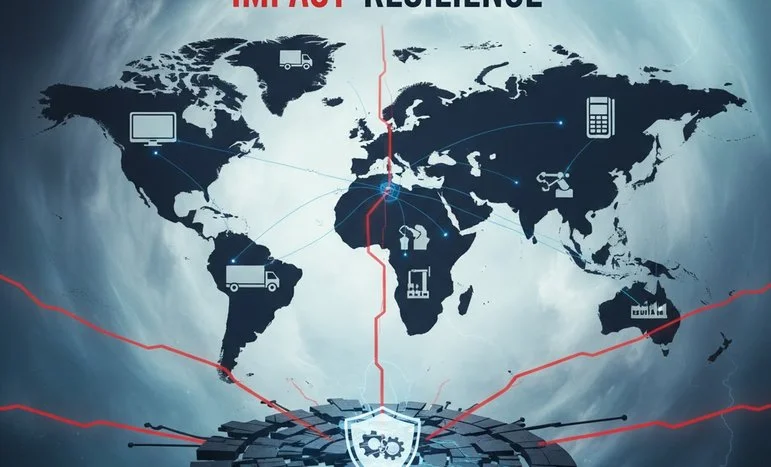
Global trade in 2025 is navigating one of its most uncertain periods in decades, as protectionist measures, regulatory risks, and geopolitical tensions converge to reshape the landscape. What once seemed like a steady march toward liberalization and interconnectedness has given way to a more fragmented reality, where looming tariffs, unpredictable regulations, and uneven enforcement of trade agreements are raising costs and slowing growth. The consequences are being felt across supply chains, boardrooms, and households, as businesses struggle to forecast costs and governments grapple with balancing national interests against global obligations.
The drivers of this uncertainty are varied but interconnected. Geopolitical tensions remain at the forefront, with conflicts, sanctions, and strategic rivalries increasing the likelihood of sudden tariffs or export restrictions. The United States and China continue to spar over technology and trade, while the European Union’s stance on energy imports and conflicts in Eastern Europe add layers of complexity. Regulatory divergence compounds the problem, as different nations impose distinct standards and compliance requirements, leaving multinational firms exposed to unpredictable outcomes. Political cycles exacerbate volatility, with elections and government transitions often leading to abrupt shifts in trade commitments. Protectionist measures, justified on grounds of national security or economic sovereignty, ripple across supply chains, raising costs and undermining confidence.
Specific examples in 2025 illustrate the breadth of these challenges. In the United States, proposals to increase costs associated with H‑1B visa sponsorships function like tariffs on skilled foreign labor. For sectors such as technology, healthcare, and research, where talent mobility is crucial, these measures could raise costs significantly and complicate recruitment strategies. In Europe, regulatory scrutiny of Chinese firms purchasing Russian oil highlights the intersection of trade policy and geopolitics. While aimed at maintaining leverage and ensuring compliance with sanctions, such measures create uncertainty for energy supply chains, raising legal risks, delaying shipments, and ultimately affecting global energy prices. Beyond these cases, broader geopolitical developments—from semiconductor supply chains caught in US‑China competition to Middle East energy policies influencing crude markets—underscore the volatility of the global trade environment.
The economic consequences of trade policy uncertainty are wide‑ranging. Firms face higher costs as unanticipated tariffs or compliance requirements erode margins, often forcing them to pass expenses on to consumers. Investment decisions are delayed, with companies hesitant to commit capital in the face of unpredictable rules. Supply chains are disrupted as established relationships are interrupted by new restrictions, increasing inventory costs and heightening exposure to shocks. Global growth suffers, with studies suggesting that even modest increases in trade policy uncertainty can reduce GDP growth by half a percentage point to one percent over several years. Protectionist policies may shield domestic industries, but they often raise consumer prices, disproportionately affecting lower‑income households and exacerbating inequality.
In response, both corporations and policymakers are adopting strategies to mitigate risk. Firms are diversifying suppliers to reduce reliance on any single country or region, while flexible sourcing and production models allow them to adapt more quickly to policy changes. Financial hedging instruments are being used to manage exposure to tariffs and currency fluctuations, and engagement with trade associations provides a channel to monitor developments and influence regulatory outcomes. Governments, for their part, are being urged to communicate policy changes transparently to reduce market shocks, strengthen multilateral trade agreements to create predictable rules, and simplify customs procedures to lower compliance costs. Conflict resolution mechanisms, including arbitration and dispute settlement, are essential to prevent escalation and maintain trust in the system.
Long‑term considerations reveal how sustained uncertainty could reshape trade itself. Firms may increasingly localize production, prioritizing domestic manufacturing to enhance resilience even at the cost of efficiency. Digital trade, less vulnerable to tariffs, may grow rapidly, offering opportunities for technology‑driven sectors. Strategic stockpiling of critical inputs could become more common, altering working capital dynamics and raising storage costs. While these measures provide short‑term buffers, they are no substitute for stable, predictable trade policies, which remain the foundation of long‑term economic efficiency.
Trade policy uncertainty and protectionism are not merely technical issues; they are reshaping the global economic order. Looming tariffs, regulatory interventions, and geopolitical tensions are raising costs, slowing growth, and amplifying risk across supply chains. For businesses, adaptive strategies such as supplier diversification, flexible production, and careful risk management are essential. For policymakers, transparent, predictable, and cooperative trade frameworks are critical to sustaining global trade, protecting economic growth, and reducing volatility.
Mitigating trade policy uncertainty is both an economic imperative and a strategic necessity. Nations must balance domestic priorities with multilateral cooperation, ensuring that trade continues to drive prosperity, resilience, and shared opportunity. In an increasingly complex world, the choice is stark: embrace fragmentation and rising costs, or commit to stability and interconnectedness. The stakes are high, and the decisions made today will shape the trajectory of global trade for years to come.
We appreciate that not everyone can afford to pay for Views right now. That’s why we choose to keep our journalism open for everyone. If this is you, please continue to read for free.
But if you can, can we count on your support at this perilous time? Here are three good reasons to make the choice to fund us today.
1. Our quality, investigative journalism is a scrutinising force.
2. We are independent and have no billionaire owner controlling what we do, so your money directly powers our reporting.
3. It doesn’t cost much, and takes less time than it took to read this message.
Choose to support open, independent journalism on a monthly basis. Thank you.