Labor Market Strains: Unemployment and Wages


Labor market strains are emerging as one of the defining challenges of the global economy in 2025, reshaping societies and economies in ways that demand urgent and thoughtful responses. Across regions, stubbornly high youth unemployment, uneven wage trajectories, demographic headwinds, and experiments with new work models such as four‑day workweeks are converging with automation, shifting labor participation, and geopolitical shocks. The result is a workforce under stress, where inequality risks widening and growth risks slowing unless policymakers and employers adapt with inclusive and forward‑looking strategies.
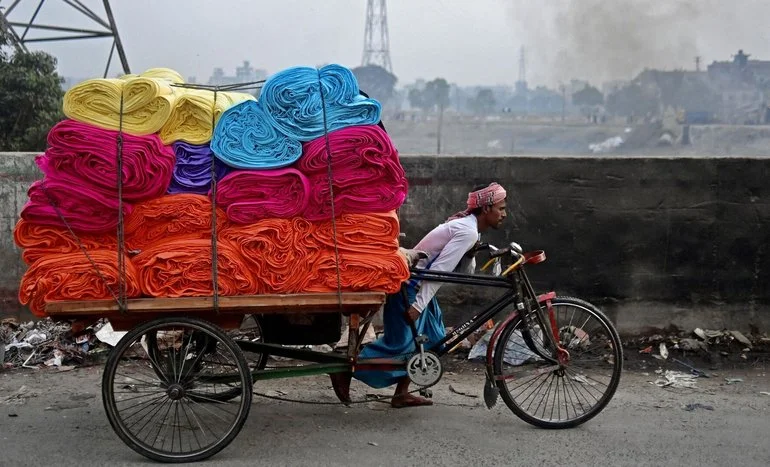
Youth unemployment is perhaps the most visible symptom of these strains. Globally, more than one in ten young people struggle to find stable, skilled work as they attempt to enter the labor force. This is not merely a cyclical problem but a structural one. Rapid technological change has increased demand for advanced digital, cognitive, and interpersonal skills that many young entrants lack. In emerging economies, the jobs available are often informal, low‑paid, and devoid of social protections. Labor‑intensive sectors that historically absorbed young workers have failed to generate sufficient opportunities, while geographic mismatches mean that jobs are created in places far removed from where young people live. The consequences are severe: economies lose out on lifetime earnings and diminished human capital, while societies face disaffection, political volatility, and the risk of long‑term exclusion from the labor market.
Wage dynamics add another layer of complexity. In Brazil, recent years have seen wage pressure in several sectors as labor shortages pushed employers to raise pay and benefits, lifting household incomes but also creating inflationary risks. In the United States, headline unemployment remains low, yet labor force participation—particularly among prime‑age men—has not fully recovered, and wage growth for many lower‑paid occupations lags behind rising living costs. Across advanced economies, real wage stagnation over decades has contributed to political discontent and calls for redistribution. These uneven wage patterns reflect and exacerbate inequality, with high‑skill workers capturing much of the gains of modern economies while routine workers face stagnant real incomes.
Experiments with new work models, such as the four‑day workweek, illustrate both promise and peril. Trials in the United Kingdom and elsewhere suggest that productivity can be maintained or even improved when working hours are compressed and tasks redesigned. Employee wellbeing, retention, and mental health often improve. Yet adoption remains uneven, fitting better in knowledge and service sectors than in manufacturing or frontline services. If widely adopted only in high‑productivity sectors, the four‑day week risks creating a two‑tier labor market where some workers enjoy improved conditions while others remain bound to standard hours or precarious contracts. To capture broad benefits, flexible work reforms must be paired with training, portable benefits, and sector‑specific guidance.
China offers a stark case of intersecting labor market strains. Youth unemployment rates among urban graduates and early‑career cohorts are alarmingly high, while low birthrates and an aging population tighten the future labor supply and raise long‑term dependency ratios. Structural changes from an export‑ and investment‑driven model to one based on consumption and services create transitional frictions for older workers and firms seeking higher‑skilled labor. China’s experience underscores how demographic trends magnify labor market stresses: fewer entrants combined with structural change equals greater mismatch unless reskilling and labor mobility policies are accelerated.
Automation and artificial intelligence are reshaping the very structure of work. Automation substitutes routine tasks, while AI augments high‑skill work, widening the premium for advanced capabilities. The net effect on employment depends on policy, investment in skills, and the speed of transition. Rapid automation without reskilling can intensify short‑term unemployment and deepen inequality. A proactive strategy—lifelong learning, apprenticeship models, and portable credentials—can convert technological disruption into net opportunity, but without such measures, the risks of exclusion and polarization grow.
Addressing labor market strains requires a multi‑pronged agenda. Education systems must be revamped to combine technical skills, digital literacy, and transferable soft skills, while continuous training for displaced workers must be subsidized. Active labor market policies, including targeted wage subsidies, internships, and public employment programs, can reintegrate youth and the long‑term unemployed. Supportive family and demographic policies—childcare, family leave, housing affordability—encourage higher participation, especially among women, and ease demographic pressures. Inclusive adoption of new work models must ensure protections so benefits are not confined to privileged sectors. Labor market institutions must be strengthened, with modernized minimum wage policies and portable social protections for gig economy workers. Managed migration frameworks can moderate labor shortages while protecting domestic workforce development. Macro policies must support demand during downturns while investing in productivity‑enhancing public goods.
The private sector and civil society have critical roles to play. Firms that invest in on‑the‑job training and stable careers reduce churn and skill gaps. Social partners—business, labor, and government—can design sectoral upskilling initiatives and shared‑cost apprenticeships. Technology platforms must be regulated to avoid predatory work arrangements and to support worker data portability. Employers, unions, and civil society must act as partners in shaping a labor market that is resilient, inclusive, and fair.
Labor market strains are a multi‑dimensional challenge, encompassing youth unemployment, uneven wages, demographic decline, and rapid technological change. The risk is a bifurcated labor market and deepening inequality. But policy choices matter. With targeted education, active labor market policies, inclusive workplace innovations, and international cooperation, economies can manage the transition, boost productivity, and ensure that the next generation finds meaningful, fairly compensated work. Acting now, before distortions ossify, is crucial. The right mix of investment in skills, social protection, and flexible, equitable labor practices can turn present strains into the foundation for a more resilient and inclusive global labor market.
We appreciate that not everyone can afford to pay for Views right now. That’s why we choose to keep our journalism open for everyone. If this is you, please continue to read for free.
But if you can, can we count on your support at this perilous time? Here are three good reasons to make the choice to fund us today.
1. Our quality, investigative journalism is a scrutinising force.
2. We are independent and have no billionaire owner controlling what we do, so your money directly powers our reporting.
3. It doesn’t cost much, and takes less time than it took to read this message.
Choose to support open, independent journalism on a monthly basis. Thank you.