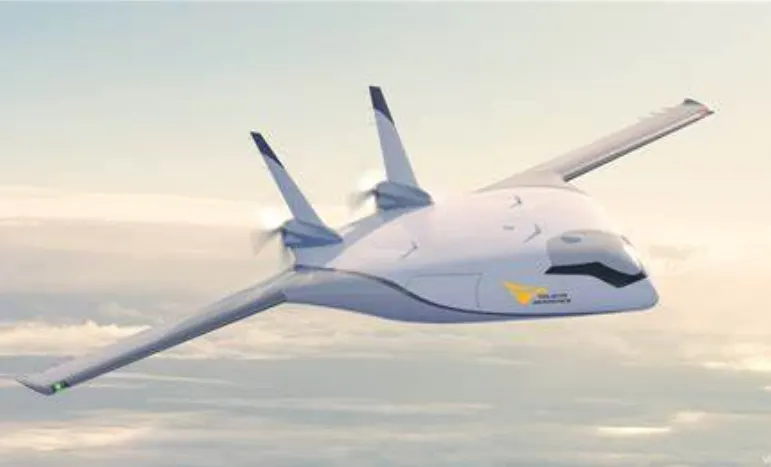


Natilus Horizon: Pioneering Sustainable Aviation
In response to the growing demand for sustainable aviation, San Diego-based Natilus has introduced its latest aircraft concept, the Horizon. This cutting-edge aircraft promises to reduce emissions by 50% and improve fuel efficiency by 30% compared to traditional planes. Set to enter service by 2030, the Horizon features a unique blended-wing body design, which expands passenger capacity and payload space while minimizing its environmental impact.
Innovative Design and Features
The Horizon departs from conventional aircraft designs, moving away from the typical “tube and wing” structure. Instead, it integrates the wing and fuselage into a unified form that minimizes drag and optimizes aerodynamics. This design not only enhances efficiency but also offers 30% more floor space, potentially allowing for enhanced passenger experiences and innovative cabin layouts. Features like passenger lounges may become possible, especially on longer flights.
Despite these ambitious goals, Natilus CEO Aleksey Matyushev acknowledges the challenges ahead. The aircraft’s unconventional shape raises concerns around regulatory approval and adapting to existing certification processes for such a novel design. However, Matyushev remains optimistic, recognizing that the horizon represents a major step forward in sustainable air travel.
Competing in the Aviation Market
The Horizon aims to compete with established narrow-body giants like the Boeing 737 and Airbus A320, which dominate the aviation market. Unlike traditional aircraft designs, the Horizon is intended to fit seamlessly into existing airport infrastructure, minimizing the need for costly changes to ground facilities. This strategic decision allows airlines to transition to a more sustainable fleet without substantial operational disruptions.
Matyushev believes that this strategic approach offers a competitive advantage, especially as larger aircraft manufacturers, like Boeing and Airbus, face ongoing delivery delays. He noted, “The narrow-body market, where the Horizon fits, will be the biggest market over the next two decades.”
The Future of Blended-Wing Aircraft
As Natilus pushes forward with the Horizon, it joins other aerospace innovators, such as JetZero, in exploring blended-wing designs. Although past attempts by Boeing and McDonnell Douglas to develop similar concepts stalled, Matyushev is confident that recent advancements in flight control and aerodynamics will make a commercial blended-wing aircraft feasible by 2030.
The Horizon’s initial cargo version has already attracted orders, signaling strong interest in its unique capabilities. If successful, the Horizon could mark a transformative step toward cleaner and more efficient air travel, pushing the aerospace industry toward a more sustainable future.
Conclusion
With its pioneering design and environmental focus, the Horizon represents an exciting breakthrough in aviation. If Natilus can overcome the hurdles of certification and regulatory approval, the Horizon could reshape the aviation industry, offering more sustainable options without compromising on performance or passenger experience. As the aerospace industry moves toward a greener future, innovations like the Horizon may play a crucial role in meeting the growing demand for low-emission, fuel-efficient aircraft.
For more on Natilus and its vision for the future of aviation, visit Natilus Official Website.


