

Ukraine’s Push for NATO Membership Amid Russian Aggression
Ukraine’s push for NATO membership, championed by President Volodymyr Zelensky, remains central to its security strategy amid ongoing Russian aggression. Zelensky outlined his goals for NATO membership during a U.S. visit in September, and Kyiv has requested a formal invitation from the alliance before President Joe Biden’s current term ends. While NATO’s official position on membership has not changed, member nations like Lithuania have ramped up support, calling for Ukraine to receive advanced weaponry and military support to counter Russia effectively.
North Korean Troops in Ukraine
Complicating the situation further, NATO Secretary General Mark Rutte recently confirmed the deployment of North Korean troops to Ukraine in support of Russia, describing it as a significant escalation. In response, Lithuania’s President Gitanas Nausėda has advocated for providing Ukraine with long-range missiles and additional resources to deter this new foreign involvement. The Biden administration, however, remains cautious, continuing its prohibition on U.S.-supplied arms being used in strikes within Russian borders due to the risk of triggering broader military escalations.
Dmitry Medvedev’s Stark Warning
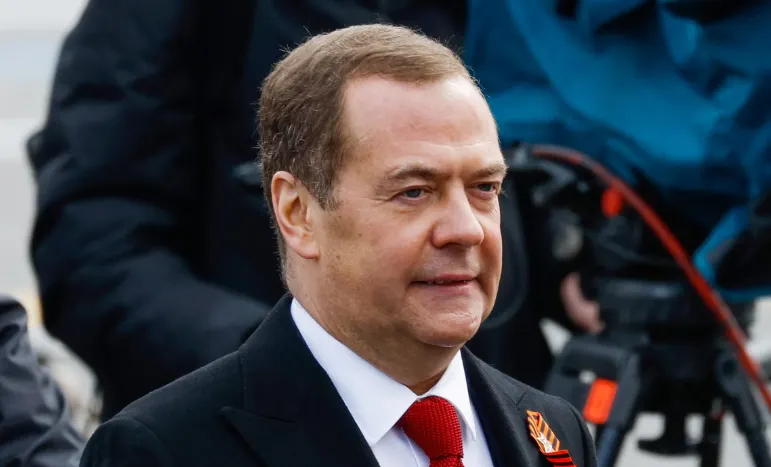
Dmitry Medvedev, former Russian president and current deputy chairman of Russia’s Security Council, has issued a stark warning that Ukraine’s admission into NATO could lead to World War III. His comments came during an interview with the Russian state-affiliated RT network, where he expressed sharp opposition to the recent pro-NATO stance voiced by former U.S. Secretary of State Henry Kissinger shortly before his death in November 2023. Medvedev dismissed Kissinger’s suggestion that Ukraine’s integration into NATO might be inevitable, countering that the decision holds grave risks, including the potential for a full-scale global conflict.
Medvedev has previously raised alarms about NATO’s “encroachment” on Russia, echoing Kremlin concerns that NATO’s support for Ukraine is a direct challenge to Russian sovereignty. The escalating rhetoric underscores Moscow’s long-standing assertion that Ukraine’s membership in NATO would violate its “security red line,” leading to further geopolitical instability. Medvedev’s statements align with Russia’s ongoing framing of the war in Ukraine as a proxy conflict between NATO and Moscow.
This geopolitical tension underscores the complex web of alliances and the high stakes involved in Ukraine’s bid to join NATO while the war with Russia intensifies.