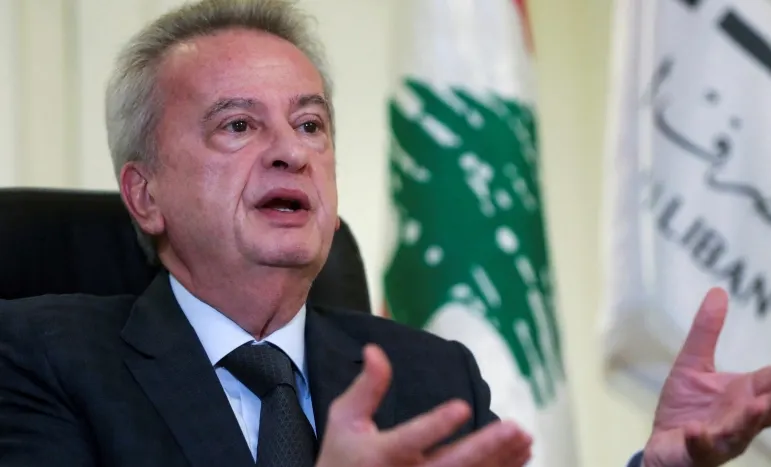


Riad Salameh: Former Lebanese Central Bank Governor Under Fire
Riad Salameh’s nearly three-decade tenure as the governor of Lebanon’s central bank ended amidst widespread controversy, with many Lebanese holding him accountable for the financial crisis that has plagued the country since late 2019. Initially praised for stabilizing Lebanon’s economy after the civil war, Salameh’s reputation has deteriorated under a cloud of allegations, including charges of financial misconduct and embezzlement.
Charges and Investigations
Salameh, 74, faces multiple legal battles both in Lebanon and abroad. Locally, Mount Lebanon’s first examining magistrate, Nicola Mansour, recently charged him with illicit enrichment and issued an arrest warrant related to a rented apartment in France. The apartment, rented from Salameh’s former partner Anna Kosakova for $500,000 annually, was reportedly intended as a substitute office for the central bank but was sparsely furnished with minimal equipment. This marked the second warrant issued against him in less than two months.
Internationally, Salameh is under investigation in France, Germany, and Luxembourg for alleged illicit enrichment and laundering of $330 million. France has issued an international arrest warrant, and the United States, the United Kingdom, and Canada have sanctioned Salameh and his close associates. Despite these actions, Lebanon’s legal framework prevents the extradition of its citizens, complicating international efforts to bring Salameh to trial abroad.
Salameh’s Defense
Salameh denies all allegations of corruption, embezzlement, and illicit enrichment, claiming his wealth stems from inherited properties, personal investments, and his previous career as an investment banker at Merrill Lynch. Following his arrest in September, Salameh was also charged with embezzling $42 million. He has characterized the international investigations as politically motivated attempts to scapegoat him for Lebanon’s financial collapse.
Broader Implications
The charges against Salameh carry significant implications for Lebanon’s political and economic stability. As the former governor of the central bank, his actions and policies are deeply intertwined with the country’s current financial crisis. The ongoing investigations and sanctions against him highlight a broader international push for accountability within Lebanon’s governance structures.